


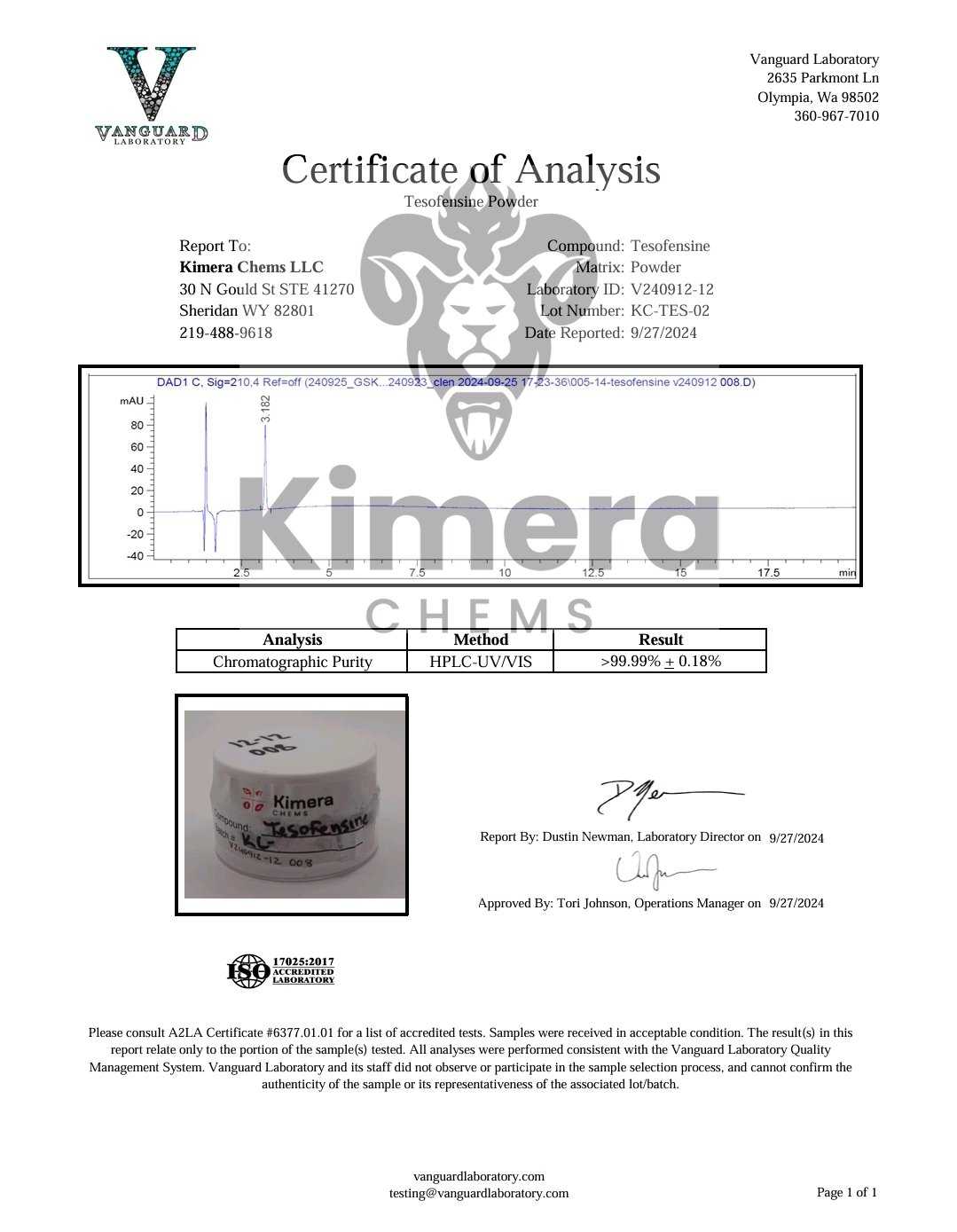
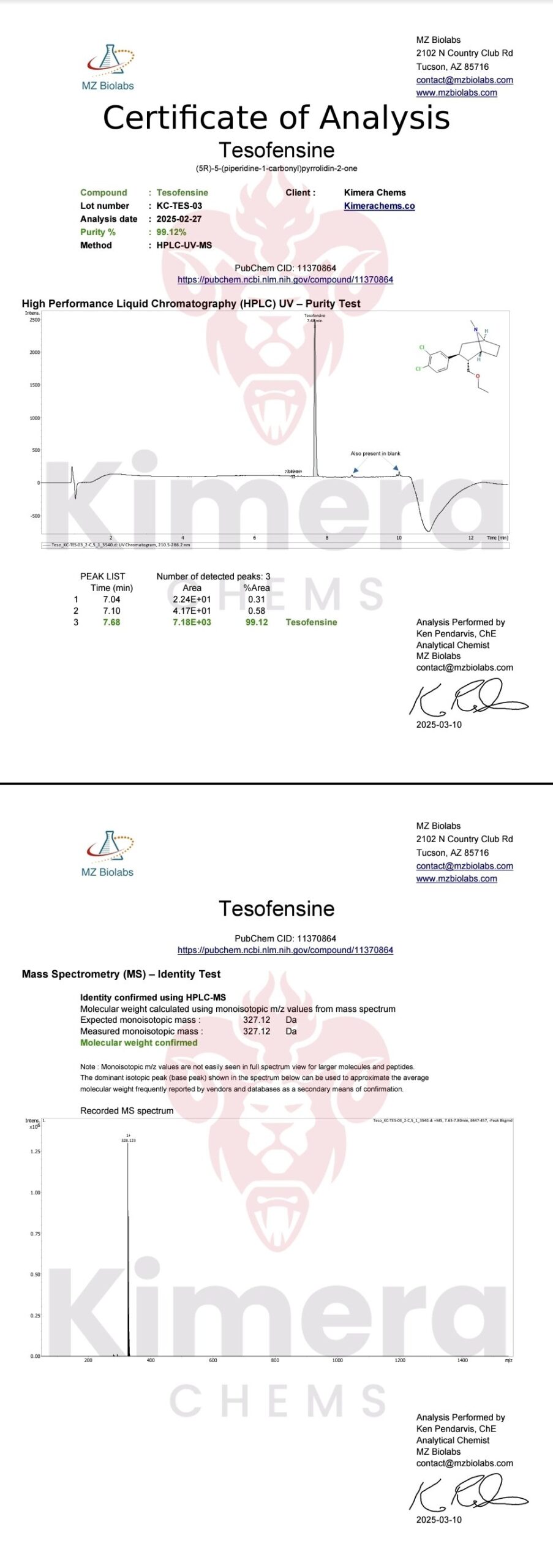

Tesofensine Overview
Tesofensine, also known by its development code NS2330, is a synthetic small-molecule central nervous system modulator studied in laboratory and clinical research for its activity as a triple monoamine reuptake inhibitor. It inhibits the reuptake of dopamine (DAT), norepinephrine (NET), and serotonin (SERT), making it a compound of interest in research on neurochemical regulation, appetite control, and CNS signaling.
In experimental contexts, tesofensine is used to study monoaminergic tone, neural network modulation, and structure–activity relationships (SAR) of multi-target reuptake inhibitors.
Tesofensine is not approved for human or veterinary use in this context and is supplied strictly for laboratory and analytical research purposes.
Mechanism of Action
Tesofensine functions as a non-selective monoamine reuptake inhibitor. In research models, inhibition of DAT, NET, and SERT leads to:
-
Increased synaptic concentrations of dopamine, norepinephrine, and serotonin
-
Modulation of central reward, motivation, and arousal pathways
-
Altered appetite- and energy-related neural signaling
-
Utility as a probe for balanced monoaminergic modulation
Unlike single-transporter inhibitors, tesofensine is studied for its combined, balanced action across all three major monoamine systems.
Chemical Structure

Chemical Name:
Tesofensine
Synonyms:
Tesofensine, NS2330
Chemical Class:
Triple monoamine reuptake inhibitor
Molecular Formula:
C₁₇H₂₃Cl₂NO
Molecular Weight:
328.28 g/mol
CAS Number:
195875-84-4
PubChem CID:
9869025
Structural Description:
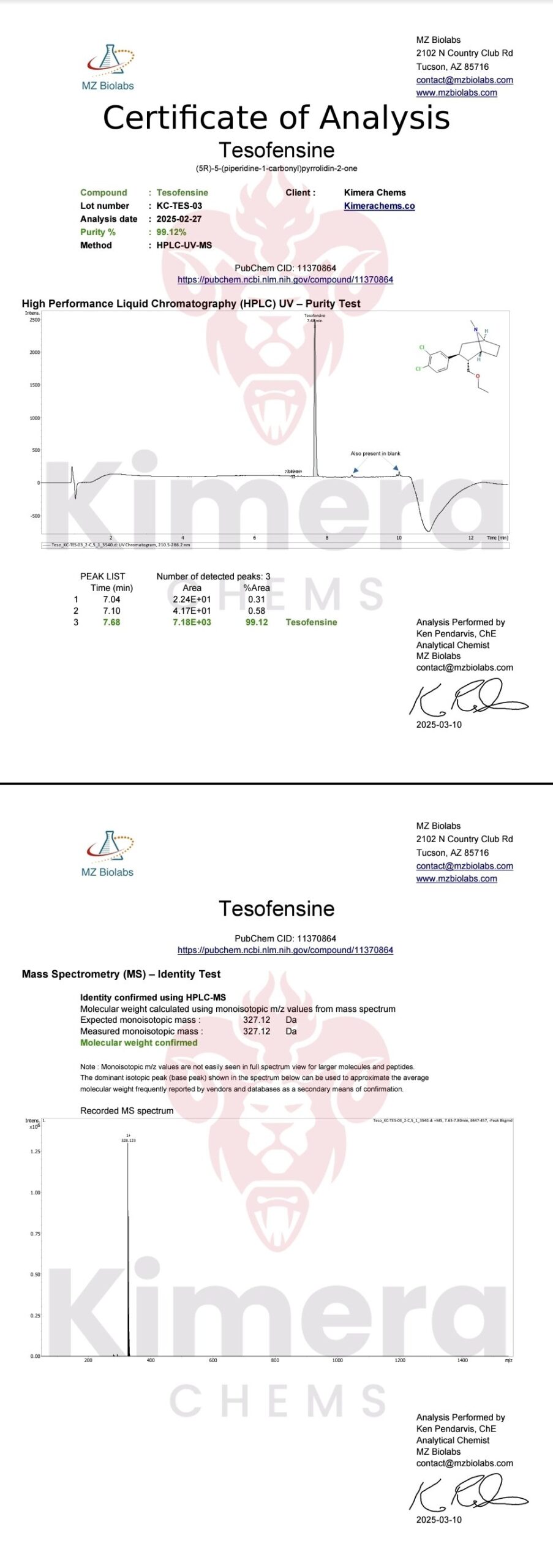
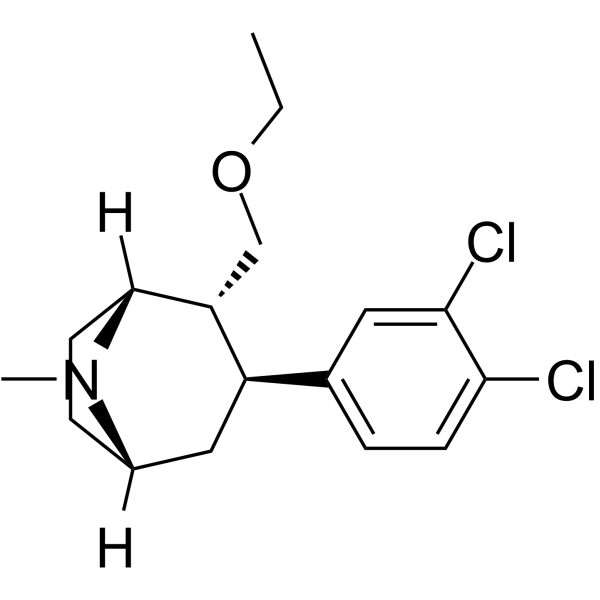
Tesofensine is a chlorinated bicyclic small molecule with a tertiary amine, enabling high-affinity interaction with monoamine transporters. Its structure supports balanced inhibition of DAT, NET, and SERT, distinguishing it from more selective reuptake inhibitors. Structural identification and molecular data are indexed in PubChem.
Physical and Chemical Properties
-
Appearance: White to off-white solid
-
Solubility: Soluble in organic solvents; limited aqueous solubility (free base)
-
Stability: Stable under dry, cool, and light-protected storage conditions
Research Focus Areas
Tesofensine is commonly examined in laboratory research related to:
-
Dopamine, norepinephrine, and serotonin reuptake modulation
-
Monoaminergic signaling balance and CNS network studies
-
Appetite, motivation, and energy-regulation research models
-
Structure–activity relationship (SAR) studies of multi-target reuptake inhibitors
Research Use Disclaimer
Tesofensine is intended for research use only.
Not for human consumption, therapeutic use, or diagnostic application. All handling and use must comply with applicable laws, regulations, and laboratory safety standards.
Summary
Tesofensine (NS2330) is a triple monoamine reuptake inhibitor with verified chemical identifiers:
-
CAS: 195875-84-4
-
Molecular Formula: C₁₇H₂₃Cl₂NO
-
Molecular Weight: 328.28 g/mol
-
PubChem CID: 9869025
Its balanced action across dopamine, norepinephrine, and serotonin systems makes tesofensine a valuable research compound for studies of monoaminergic signaling and CNS modulation.
| CAS Number | 195875-84-4 |
| IUPAC Name | (1R,2R,3S)-3-(3,4-dichlorophenyl)-2-(ethoxymethyl)-8-methyl-8-azabicyclo[3.2.1]octane |
| Molecular Formula | C₁₇H₂₃Cl₂NO |
| Molecular Weight | 328.28 |
| Dry-Fill Capsule Concentration | 250mcg |
| Liquid Concentration And Solution | 1mg/ml PEG400, DMSO |