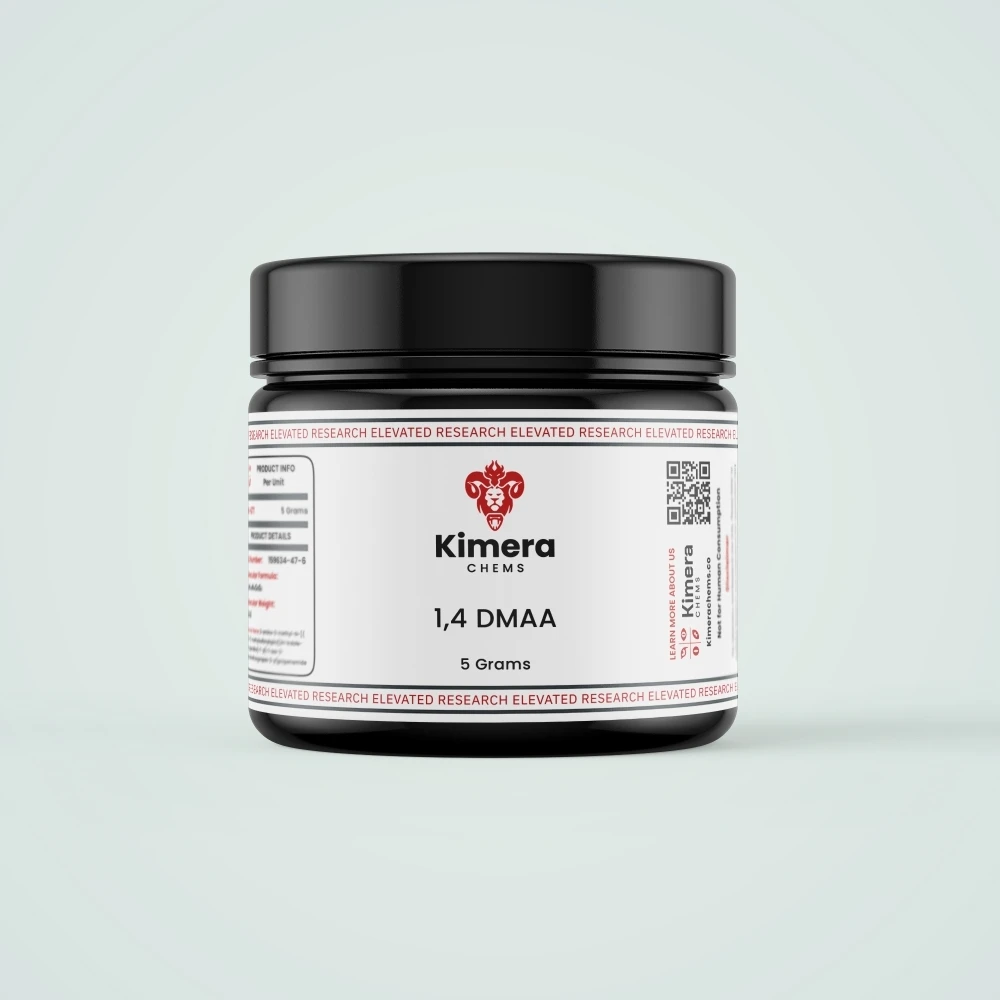
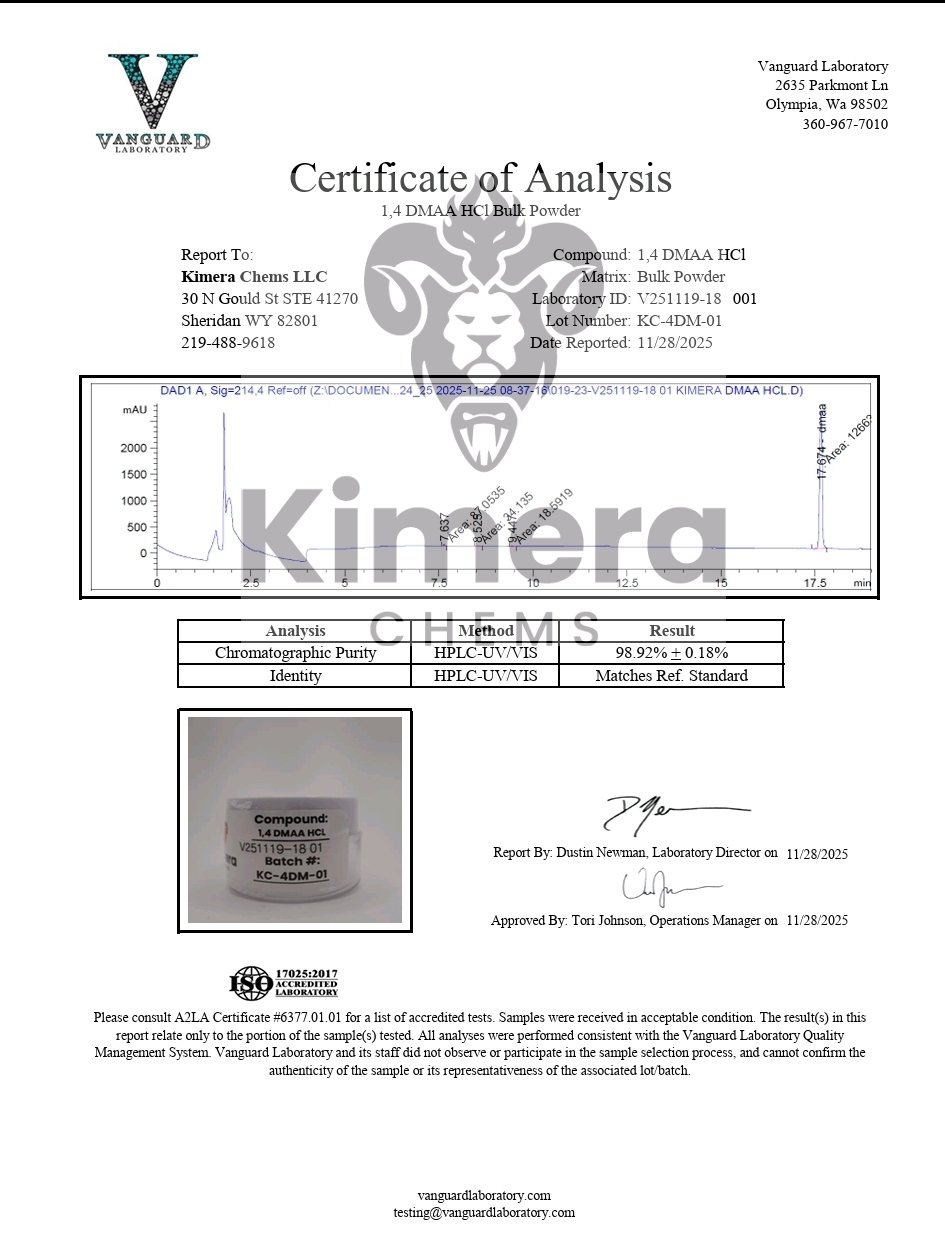
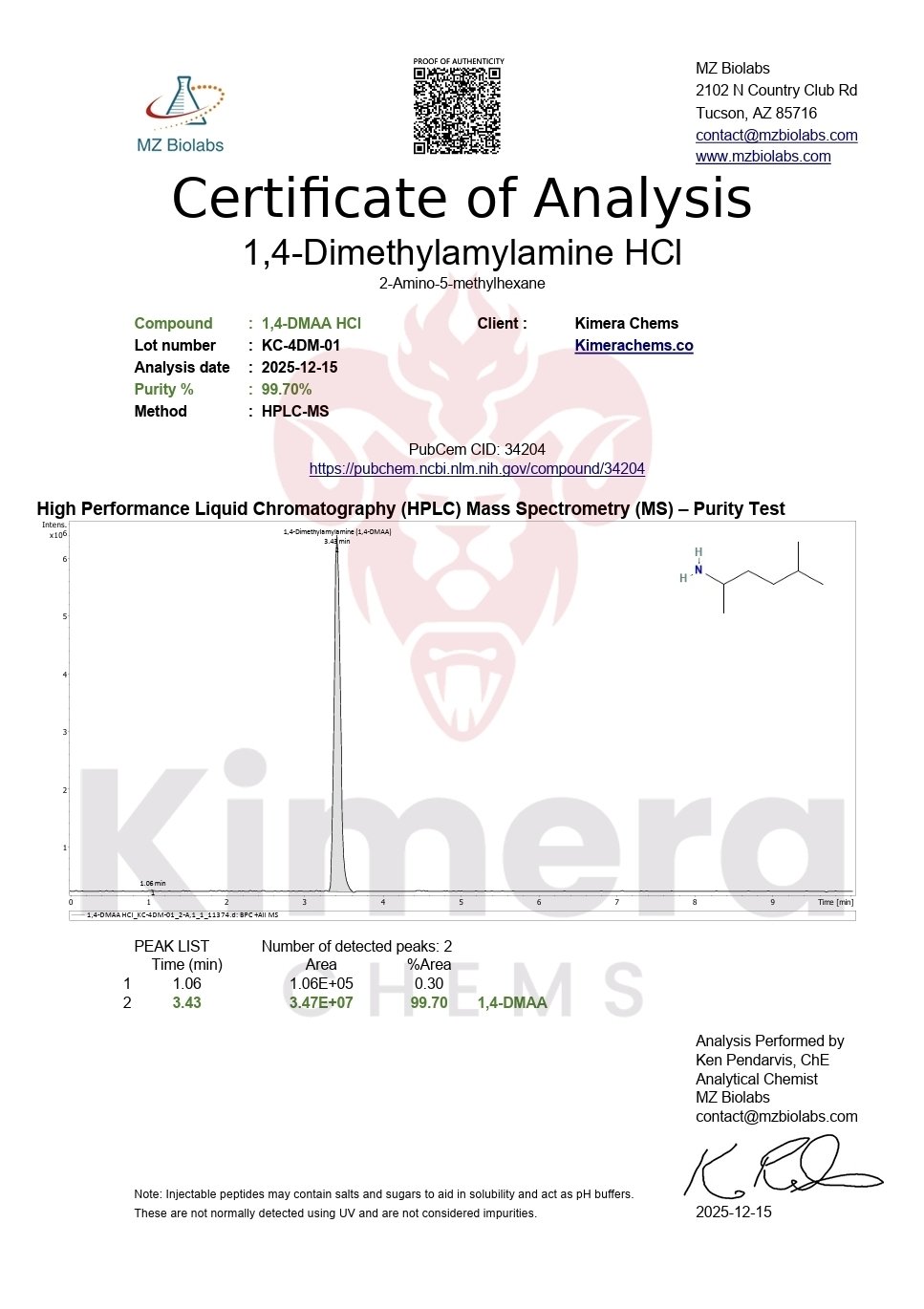
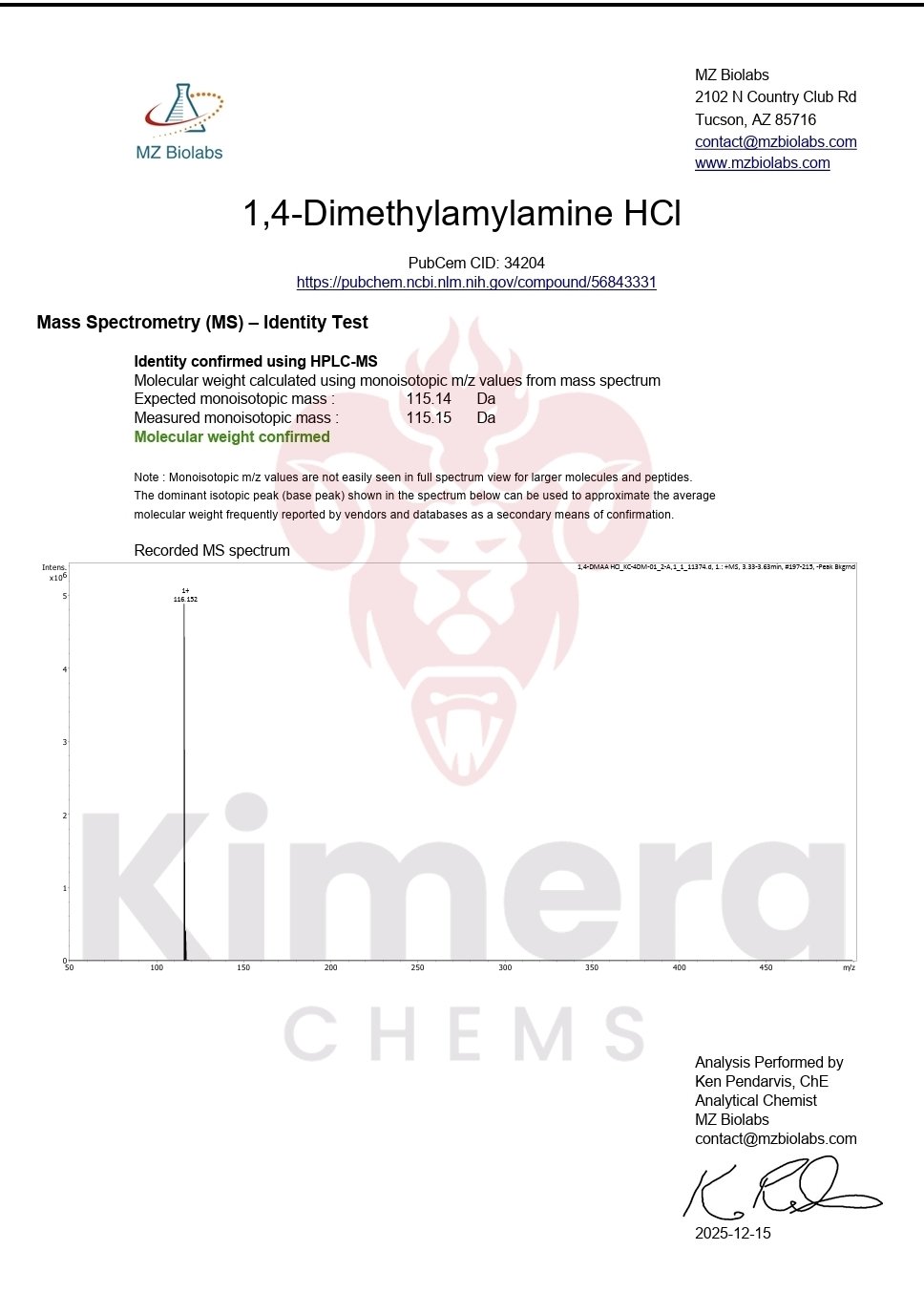

1,4-DMAA Overview
1,4-DMAA, also known as 1,4-Dimethylamylamine, is a synthetic aliphatic amine structurally related to other dimethylamylamine isomers. It is distinct from the more widely referenced 1,3-DMAA, differing by the position of methyl substitution along the carbon chain, which results in different physicochemical and pharmacological properties.
In laboratory research, 1,4-DMAA is examined for its role in central nervous system stimulation, adrenergic signaling, and structure–activity relationship (SAR) studies involving alkylamine stimulants.
1,4-DMAA is not approved for human or veterinary use and is supplied strictly for laboratory and analytical research purposes.
Mechanism of Action
1,4-DMAA is studied as a sympathomimetic amine. In experimental systems, compounds of this class are associated with:
-
Modulation of adrenergic neurotransmission
-
Influence on central arousal and alertness signaling
-
Interaction with monoaminergic pathways related to stimulant activity
Due to its isomeric differences from other DMAA variants, 1,4-DMAA is primarily used in comparative stimulant SAR research rather than as a direct analog of 1,3-DMAA.
Chemical Structure


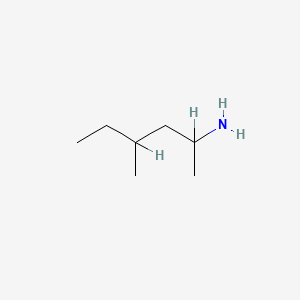
Chemical Name:
1,4-Dimethylamylamine
(also known as 2-amino-4-methylhexane)
Synonyms:
1,4-DMAA, 1,4-Dimethylamylamine
Chemical Class:
Aliphatic amine (sympathomimetic stimulant class)
Molecular Formula:
C7H18ClN
Molecular Weight:
151.68 g/mol
CAS Number:
71776-71-1
Structural Description:
1,4-DMAA is a branched aliphatic primary amine with methyl substitutions that alter steric and electronic properties relative to other DMAA isomers. This structural variation is central to its use in stimulant SAR and adrenergic signaling research. Structural identification corresponding to CAS 105-41-9 is indexed in chemical registry and supplier databases.
Physical and Chemical Properties
-
Appearance: Colorless to pale liquid or crystalline solid (form dependent)
-
Solubility: Soluble in organic solvents; limited aqueous solubility
-
Volatility: Moderate (low-molecular-weight amine)
-
Stability: Stable under cool, dry, and light-protected storage conditions
Research Focus Areas
1,4-DMAA is commonly examined in laboratory research related to:
-
Adrenergic and sympathomimetic signaling
-
CNS stimulant pharmacology
-
Alkylamine structure–activity relationship (SAR) studies
-
Comparative analysis of DMAA positional isomers
Research Use Disclaimer
1,4-DMAA is intended for research use only.
Not for human consumption, therapeutic use, or diagnostic application. All handling and use must comply with applicable laws, regulations, and laboratory safety standards.
Summary
1,4-DMAA (1,4-Dimethylamylamine) is a branched aliphatic amine stimulant with verified chemical identifiers:
-
CAS: 71776-71-1
-
Molecular Formula: C7H18ClN
-
Molecular Weight: 151.68 g/mol
Its positional isomerism relative to other DMAA variants makes 1,4-DMAA a useful compound for adrenergic signaling and stimulant SAR research in controlled laboratory settings.
| CAS Number | 71776-71-1 |
| Other Names | 5-methyl-2-hexylamine hydrochloride, 71776-71-1, SCHEMBL11478482, 5-methylhexan-2-amine hydrochloride, 2-Amino-5-methylhexane hydrochloride, ACN-05324, CA-1084, LS414945-methyl-2-hexylamine hydrochloride, 71776-71-1, SCHEMBL11478482, 5-methylhexan-2-amine hydrochloride, 2-Amino-5-methylhexane hydrochloride, ACN-05324, CA-1084, LS41494 |
| IUPAC Name | 5-methylhexan-2-amine;hydrochloride |
| Molecular Formula | C7H18ClN |
| Molecular Weight | 151.68 |
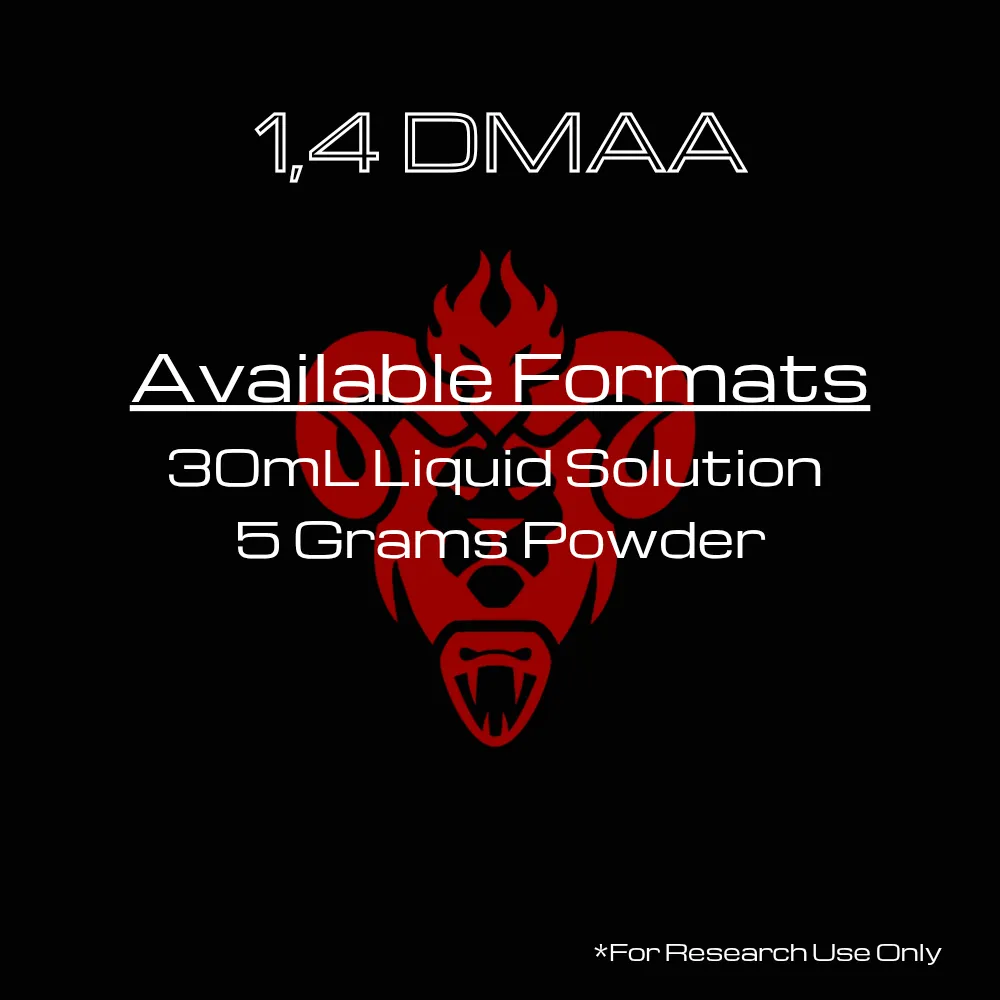
| Dry-Fill Capsule Concentration | NA |
| Liquid Concentration And Solution | 100mg/ml, PEG400, Ethanol |
| Aliquot Concentration And Solution | NA |