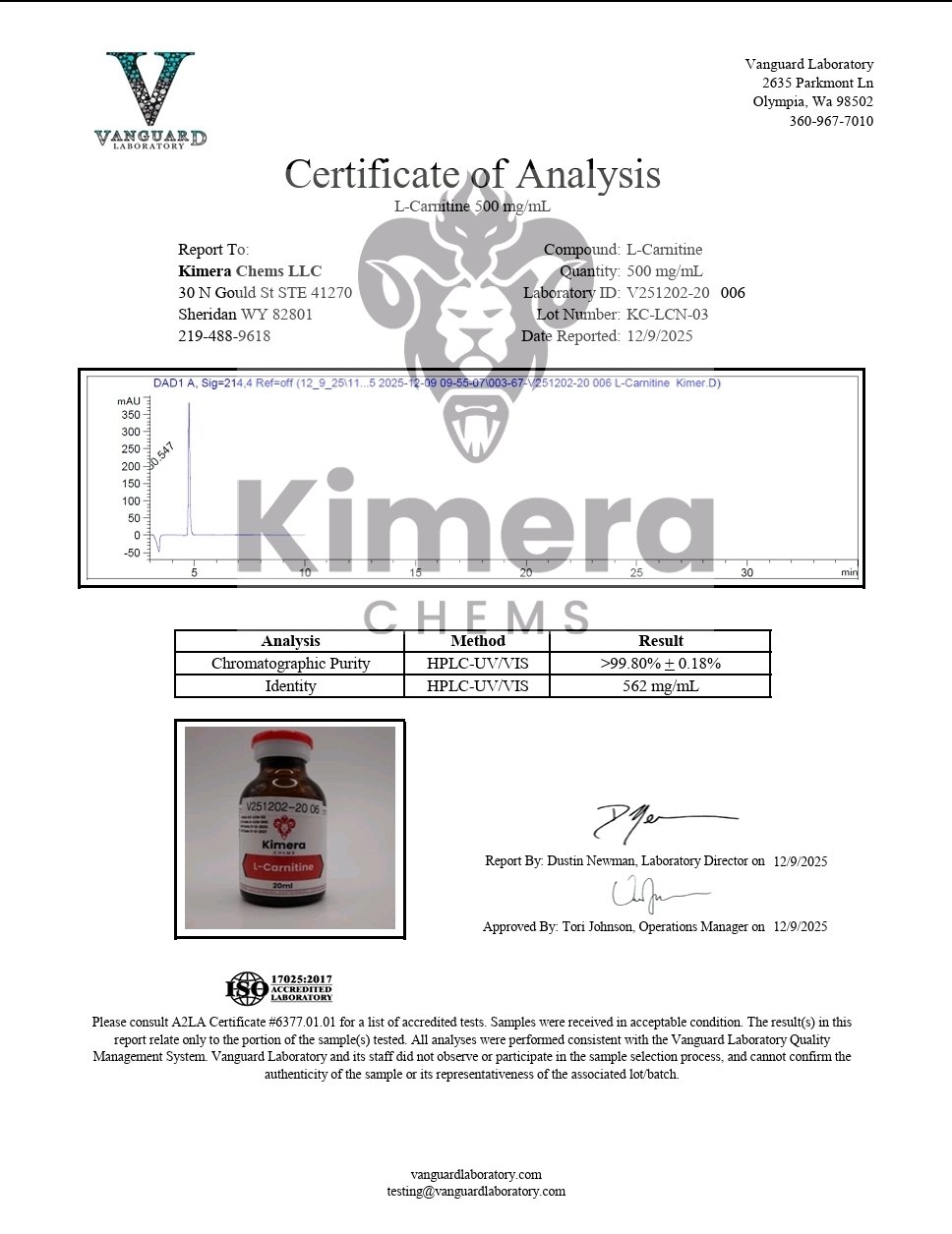

L-Carnitine Overview
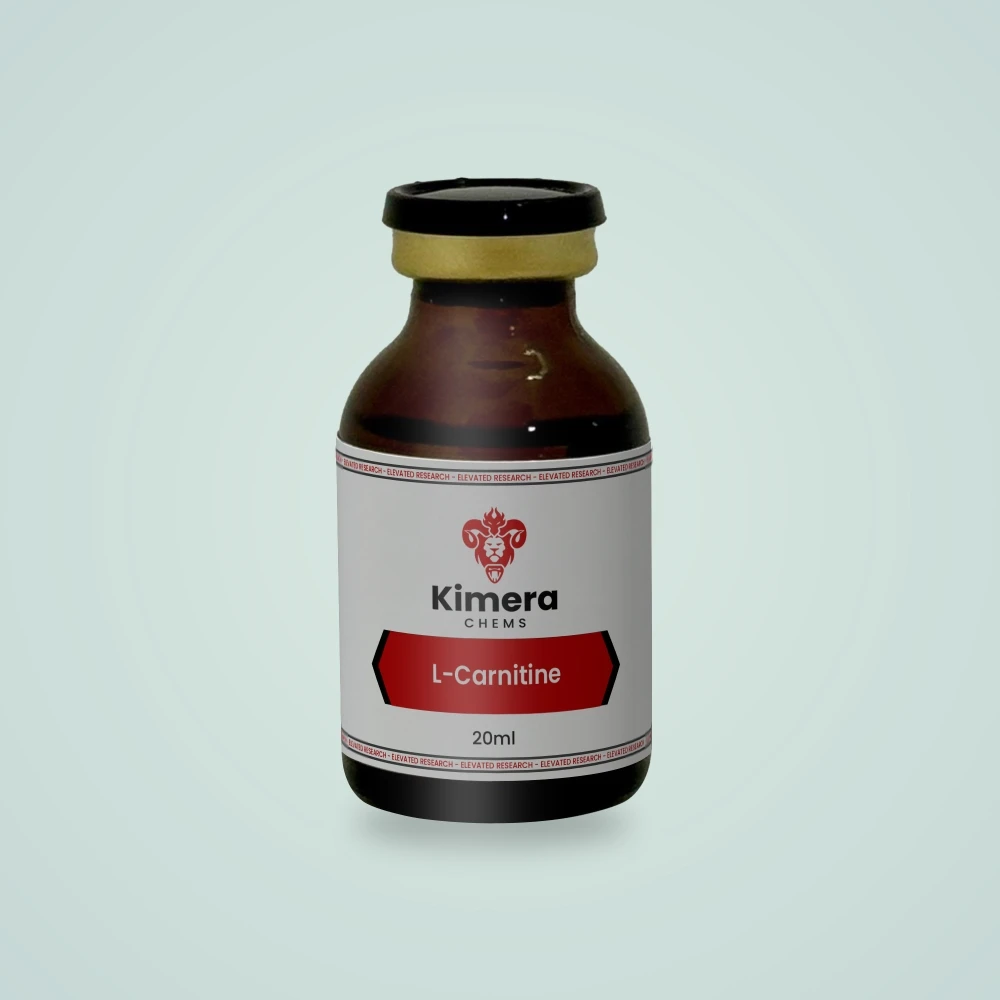
L-Carnitine is a naturally occurring quaternary ammonium compound derived from the amino acids lysine and methionine. It is extensively studied in laboratory research for its essential role in mitochondrial fatty acid transport and cellular energy metabolism. In solution form, L-Carnitine is commonly used in analytical and experimental models focused on metabolic efficiency and mitochondrial function.
L-Carnitine is not approved for human or veterinary use and is supplied strictly for laboratory and analytical research purposes.
Mechanism of Action
L-Carnitine functions as a carrier molecule that transports long-chain fatty acids across the mitochondrial inner membrane. By forming acyl-carnitine esters, it enables fatty acids to enter the mitochondrial matrix for β-oxidation and ATP production.
In research models, L-Carnitine is studied for its role in:
-
Mitochondrial fatty acid oxidation
-
Cellular energy production and ATP metabolism
-
Metabolic flexibility and lipid utilization
-
Protection against accumulation of acyl-CoA intermediates
Chemical Structure

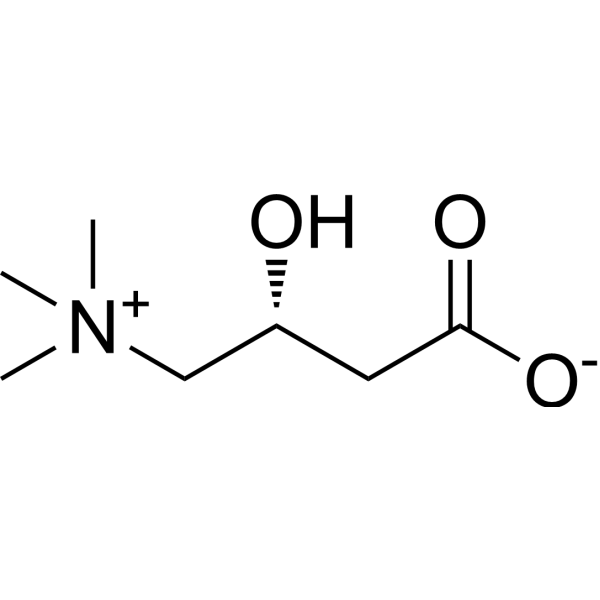
Chemical Name:
(3-Carboxy-2-hydroxypropyl)trimethylammonium hydroxide
Synonyms:
L-Carnitine
Molecular Formula:
C₇H₁₅NO₃
Molecular Weight:
161.20 g/mol
CAS Number:
541-15-1
Structural Description:
L-Carnitine is a zwitterionic quaternary ammonium compound featuring a trimethylated nitrogen and a carboxylate group. This structure enables interaction with carnitine transport systems and underlies its role in mitochondrial fatty acid shuttling. Structural identification and molecular data are available via PubChem.
Formulation Composition
Amount per mL:
-
L-Carnitine: 500 mg
Total Volume:
20 mL
Solvent System:
Sterile water with 1% benzyl alcohol
Physical and Chemical Properties
-
Appearance: Clear, colorless solution
-
Solubility: Fully soluble in water
-
Preservative: Benzyl alcohol 1%
-
Stability: Stable under cool, dry, and light-protected storage conditions
Research Focus Areas
L-Carnitine is commonly examined in laboratory research related to:
-
Mitochondrial metabolism and fatty acid oxidation
-
Cellular energy and ATP production pathways
-
Lipid transport and metabolic regulation
-
Metabolic and endurance-related research models
Research Use Disclaimer
L-Carnitine is intended for research use only.
Not for human consumption, therapeutic use, or diagnostic application. All handling and use must comply with applicable laws, regulations, and laboratory safety standards.
Summary
L-Carnitine is a foundational metabolic compound with a clearly defined chemical structure and central role in mitochondrial fatty acid transport. Supplied as an aqueous solution, it is well suited for controlled laboratory research involving cellular energy metabolism, lipid utilization, and mitochondrial function.
No product specifications available.