
TB-500 Overview
TB-500 is a synthetic peptide based on thymosin beta-4 (Tβ4) and is supplied for laboratory research as a standalone research peptide rather than as an endogenous protein isolate. In experimental research, TB-500 is studied for its role in cytoskeletal regulation, cellular migration, angiogenic signaling, and tissue-repair pathways.
TB-500 is commonly used as a research analog of thymosin beta-4, allowing controlled investigation of actin-related signaling and regenerative biology without reliance on full-length native protein sources.
TB-500 is not approved for human or veterinary use and is supplied strictly for laboratory and analytical research purposes.
Mechanism of Action
TB-500 functions primarily through actin-binding and cytoskeletal modulation. In laboratory models, it is studied for its ability to:
-
Bind G-actin, regulating actin polymerization and depolymerization
-
Promote cell migration and wound-response signaling
-
Support angiogenic and endothelial signaling pathways
-
Influence inflammatory and tissue-response mechanisms
Rather than acting via a classical receptor, TB-500 is examined as a structural signaling peptide that impacts multiple downstream cellular processes related to repair and regeneration.
Chemical Structure
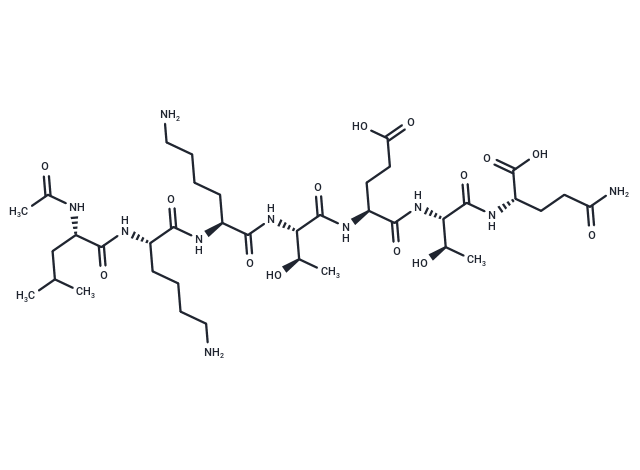
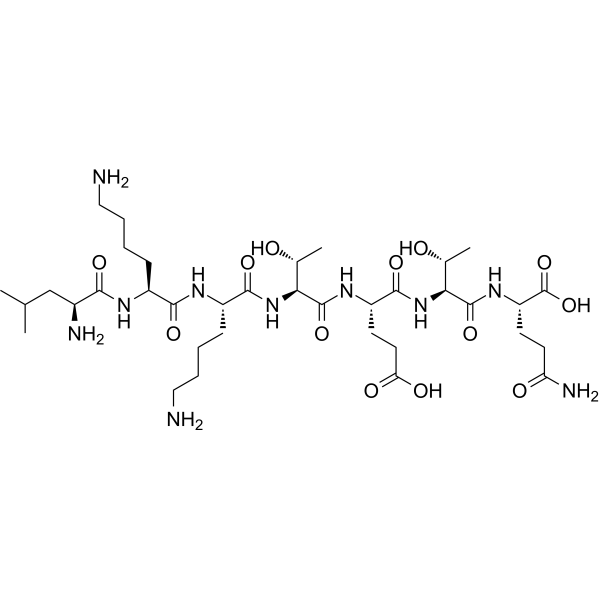
Chemical Name:
TB-500 (synthetic thymosin beta-4 peptide)
Synonyms:
TB-500
Peptide Type:
Synthetic peptide (thymosin beta-4–related)
Peptide Length:
43 amino acids
Molecular Formula:
C₂₁₂H₃₅₀N₅₆O₇₈
Molecular Weight:
4,961.5 g/mol
CAS Number:
885340-08-9
Structural Description:
TB-500 is a linear peptide corresponding to the full thymosin beta-4 amino acid sequence. Its structure preserves the actin-binding domains responsible for cytoskeletal regulation and cellular migration observed in experimental research. Structural identification corresponding to CAS 885340-08-9 is indexed in peptide supplier and chemical registry databases.
Physical and Chemical Properties
-
Appearance: White to off-white lyophilized powder
-
Solubility: Soluble in water and buffered aqueous solutions after reconstitution
-
Stability: Stable when stored lyophilized under cold, dry, and light-protected conditions
Research Focus Areas
TB-500 is commonly examined in laboratory research related to:
-
Actin dynamics and cytoskeletal signaling
-
Cell migration and tissue-repair pathways
-
Angiogenesis and endothelial biology
-
Inflammatory and regenerative response models
Research Use Disclaimer
TB-500 is intended for research use only.
Not for human consumption, therapeutic use, or diagnostic application. All handling and use must comply with applicable laws, regulations, and laboratory safety standards.
Summary
TB-500 is a synthetic thymosin beta-4 peptide with verified chemical identification:
-
CAS: 885340-08-9
-
Molecular Formula: C₂₁₂H₃₅₀N₅₆O₇₈
-
Molecular Weight: 4,961.5 g/mol
Its defined peptide structure and actin-modulating research profile make TB-500 a core compound for laboratory studies focused on cytoskeletal regulation, angiogenesis, and tissue-repair signaling.
| CAS Number | 885340-08-9 |
| Other Names | Thymosin beta4, Thymosin beta4 Acetate, TB500, TB 500, Thymosin beta(4) |
| IUPAC Name | (4S)-4-[[2-[[(2S)-2-[[(2S)-2-[[(2S)-2-[[(2S)-2-[[(2S)-2-[[(2S)-2-[[(2S,3S)-2-[[(2S,3R)-2-[[(2S)-2-[[(2S)-2-[[(2S)-2-[[(2S)-1-[(2S)-2-[[(2S)-1-[(2S)-2-[[(2S)-2-[[(2S)-2-[[(2S)-2-[[(2S,3R)-2-[[(2S)-2-[[(2S,3R)-2-[[(2S)-2-[[(2S)-2-[[(2S)-2-[[(2S)-2-[[(2S)-2-[[(2S)-2-[[(2S)-2-[[(2S)-2-[[(2S)-2-[[(2S)-2-[[(2S,3S)-2-[[(2S)-2-[[(2S)-2-[[(2S)-2-[[(2S)-2-[[(2S)-1-[(2S)-2-[[(2S)-2-[[(2S)-2-acetamido-3-hydroxypropanoyl]amino]-3-carboxypropanoyl]amino]-6-aminohexanoyl]pyrrolidine-2-carbonyl]amino]-3-carboxypropanoyl]amino]-4-methylsulfanylbutanoyl]amino]propanoyl]amino]-4-carboxybutanoyl]amino]-3-methylpentanoyl]amino]-4-carboxybutanoyl]amino]-6-aminohexanoyl]amino]-3-phenylpropanoyl]amino]-3-carboxypropanoyl]amino]-6-aminohexanoyl]amino]-3-hydroxypropanoyl]amino]-6-aminohexanoyl]amino]-4-methylpentanoyl]amino]-6-aminohexanoyl]amino]-6-aminohexanoyl]amino]-3-hydroxybutanoyl]amino]-4-carboxybutanoyl]amino]-3-hydroxybutanoyl]amino]-5-amino-5-oxopentanoyl]amino]-4-carboxybutanoyl]amino]-6-aminohexanoyl]amino]-4-amino-4-oxobutanoyl]pyrrolidine-2-carbonyl]amino]-4-methylpentanoyl]pyrrolidine-2-carbonyl]amino]-3-hydroxypropanoyl]amino]-6-aminohexanoyl]amino]-4-carboxybutanoyl]amino]-3-hydroxybutanoyl]amino]-3-methylpentanoyl]amino]-4-carboxybutanoyl]amino]-5-amino-5-oxopentanoyl]amino]-4-carboxybutanoyl]amino]-6-aminohexanoyl]amino]-5-amino-5-oxopentanoyl]amino]propanoyl]amino]acetyl]amino]-5-[[(1S)-1-carboxy-2-hydroxyethyl]amino]-5-oxopentanoic acid |
| Molecular Formula | C₂₁₂H₃₅₀N₅₆O₇₈S |
| Molecular Weight | 4963 |