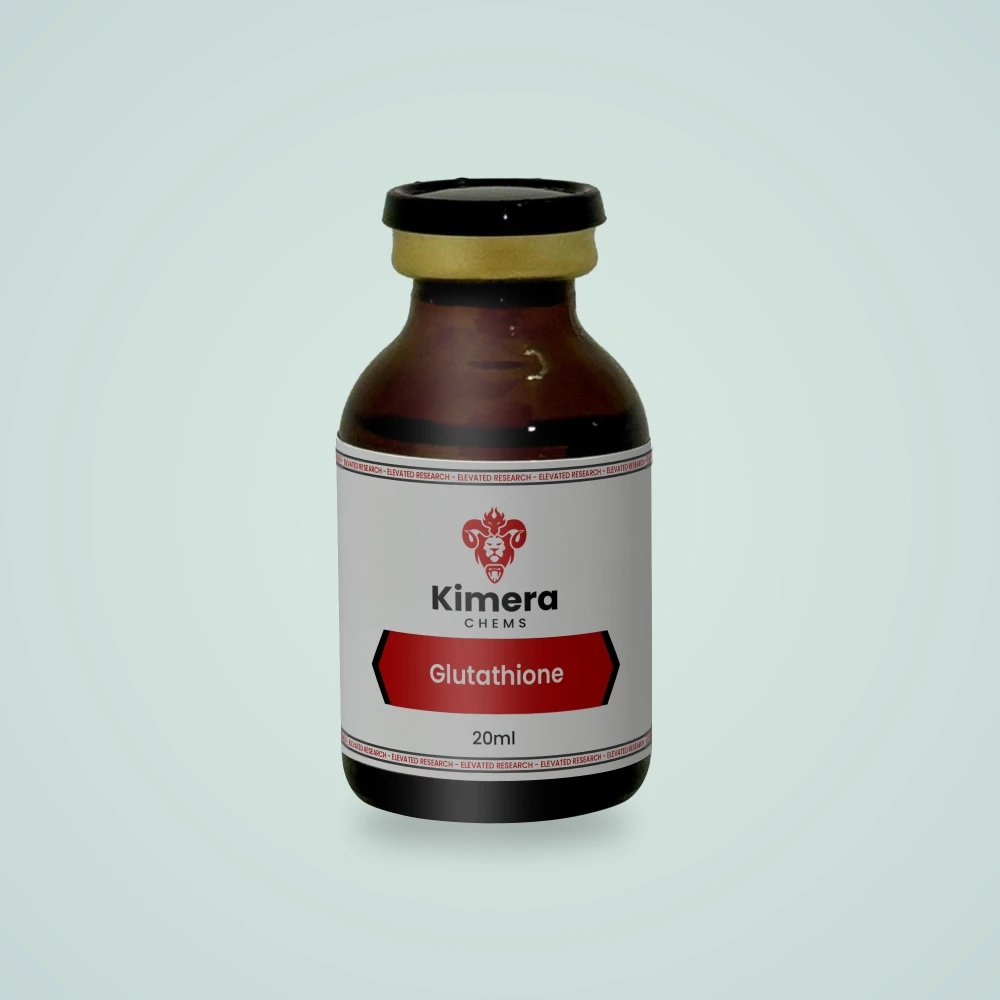
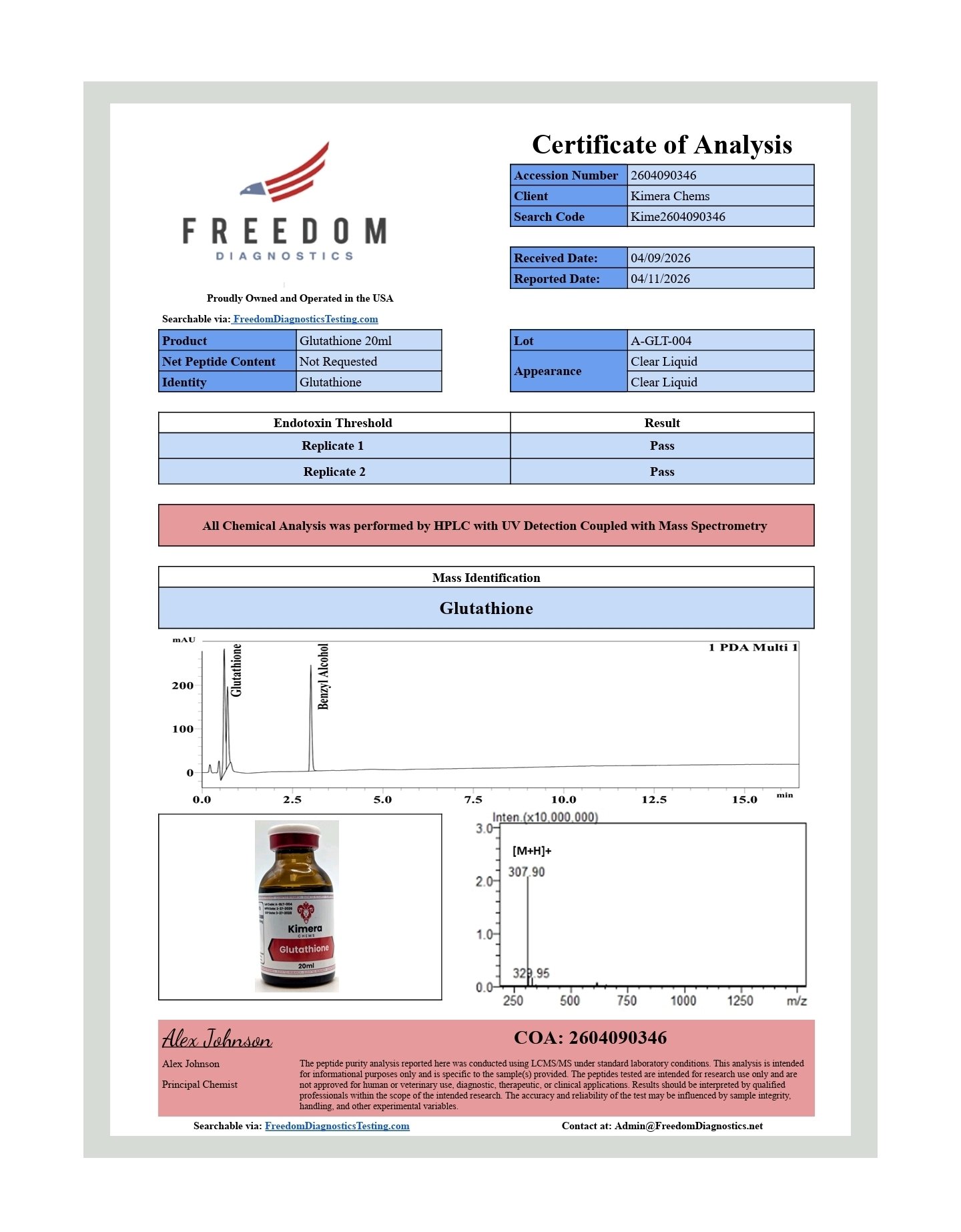
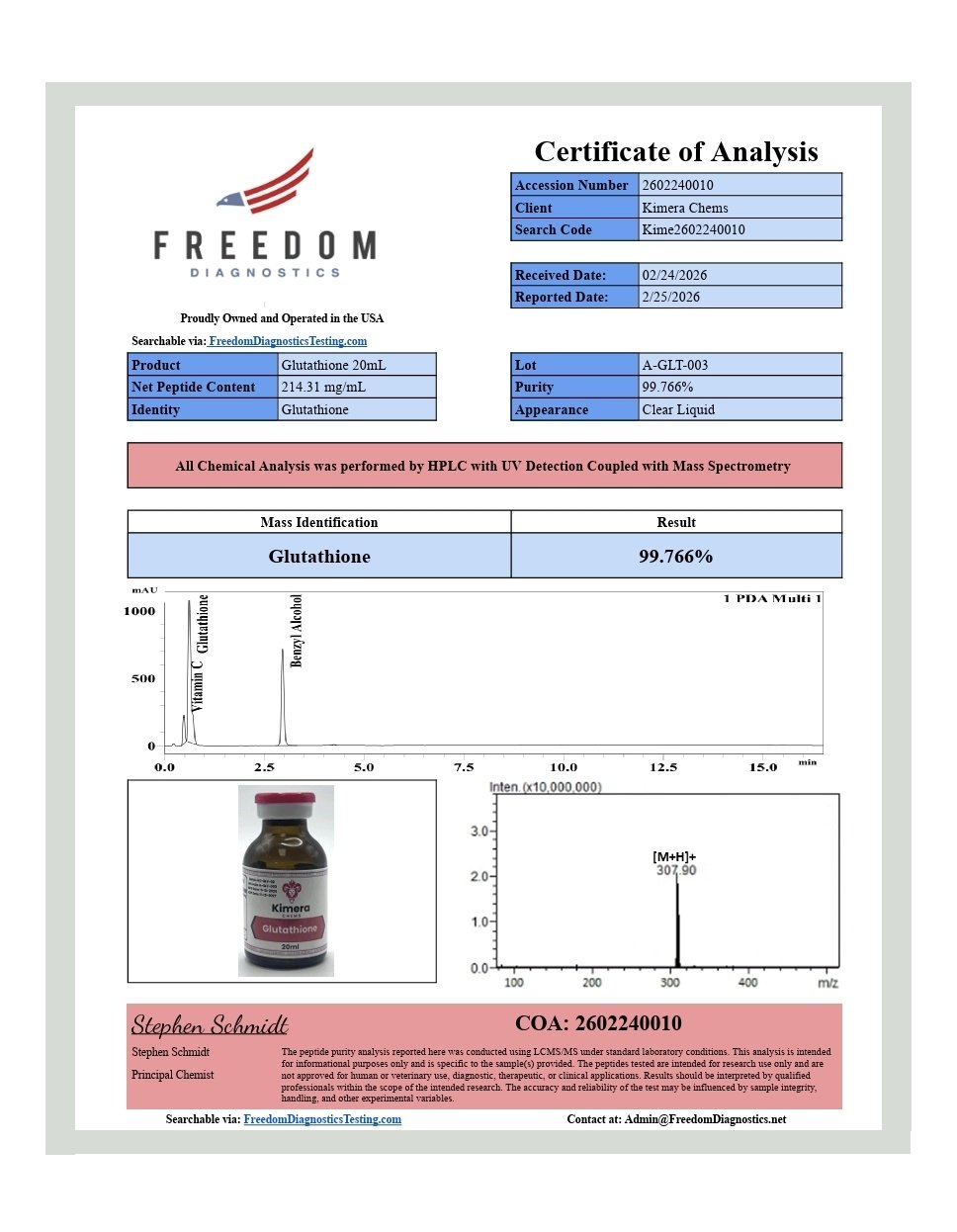

Glutathione Overview
Glutathione, commonly abbreviated as GSH, is a naturally occurring tripeptide composed of glutamic acid, cysteine, and glycine. It is widely distributed in living cells and is extensively studied in laboratory research for its central role in cellular redox balance, antioxidant defense, and detoxification mechanisms. Glutathione exists in reduced (GSH) and oxidized (GSSG) forms, with the reduced form being biologically active in most research models.
Glutathione is not approved for human or veterinary use and is supplied strictly for laboratory and analytical research purposes.
Mechanism of Action
Glutathione functions as a primary intracellular antioxidant by donating electrons to neutralize reactive oxygen species (ROS) and other free radicals. In research models, it participates in enzymatic pathways involving glutathione peroxidase, glutathione reductase, and glutathione S-transferases. These systems are critical for maintaining redox homeostasis, supporting detoxification of xenobiotics, and regulating cellular signaling processes sensitive to oxidative stress.
The thiol group of the cysteine residue is essential for glutathione’s biochemical activity and redox cycling behavior.
Chemical Structure
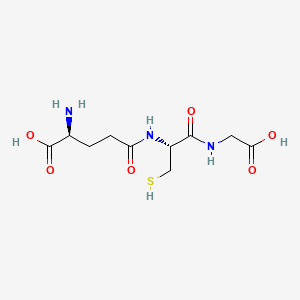
Chemical Name:
γ-L-Glutamyl-L-cysteinylglycine
Synonyms:
Glutathione, GSH
Peptide Sequence:
Glu–Cys–Gly
Molecular Formula:
C₁₀H₁₇N₃O₆S
Molecular Weight:
307.32 g/mol
CAS Number:
70-18-8
Structural Description:
Glutathione is a tripeptide featuring an atypical γ-peptide bond between the glutamate and cysteine residues, followed by a standard peptide linkage to glycine. The cysteine thiol group enables redox activity and reversible oxidation to glutathione disulfide (GSSG). Structural identification and molecular data are available via PubChem.
Physical and Chemical Properties
-
Appearance: White to off-white crystalline or lyophilized powder
-
Solubility: Soluble in water and buffered aqueous solutions
-
Stability: Sensitive to oxidation; stable when stored under cold, dry, and light-protected conditions
Research Focus Areas
Glutathione is commonly examined in laboratory research related to:
-
Oxidative stress and redox biology
-
Cellular detoxification and xenobiotic metabolism
-
Mitochondrial function and cellular protection models
-
Enzymatic antioxidant defense systems
Research Use Disclaimer
Glutathione is intended for research use only.
Not for human consumption, therapeutic use, or diagnostic application. All handling and use must comply with applicable laws, regulations, and laboratory safety standards.
Summary
Glutathione is a fundamental endogenous tripeptide with a well-defined molecular structure and central importance in redox and antioxidant research. Its unique γ-glutamyl linkage and thiol-based redox activity make it a core compound in studies of cellular protection, detoxification, and oxidative balance.
No product specifications available.