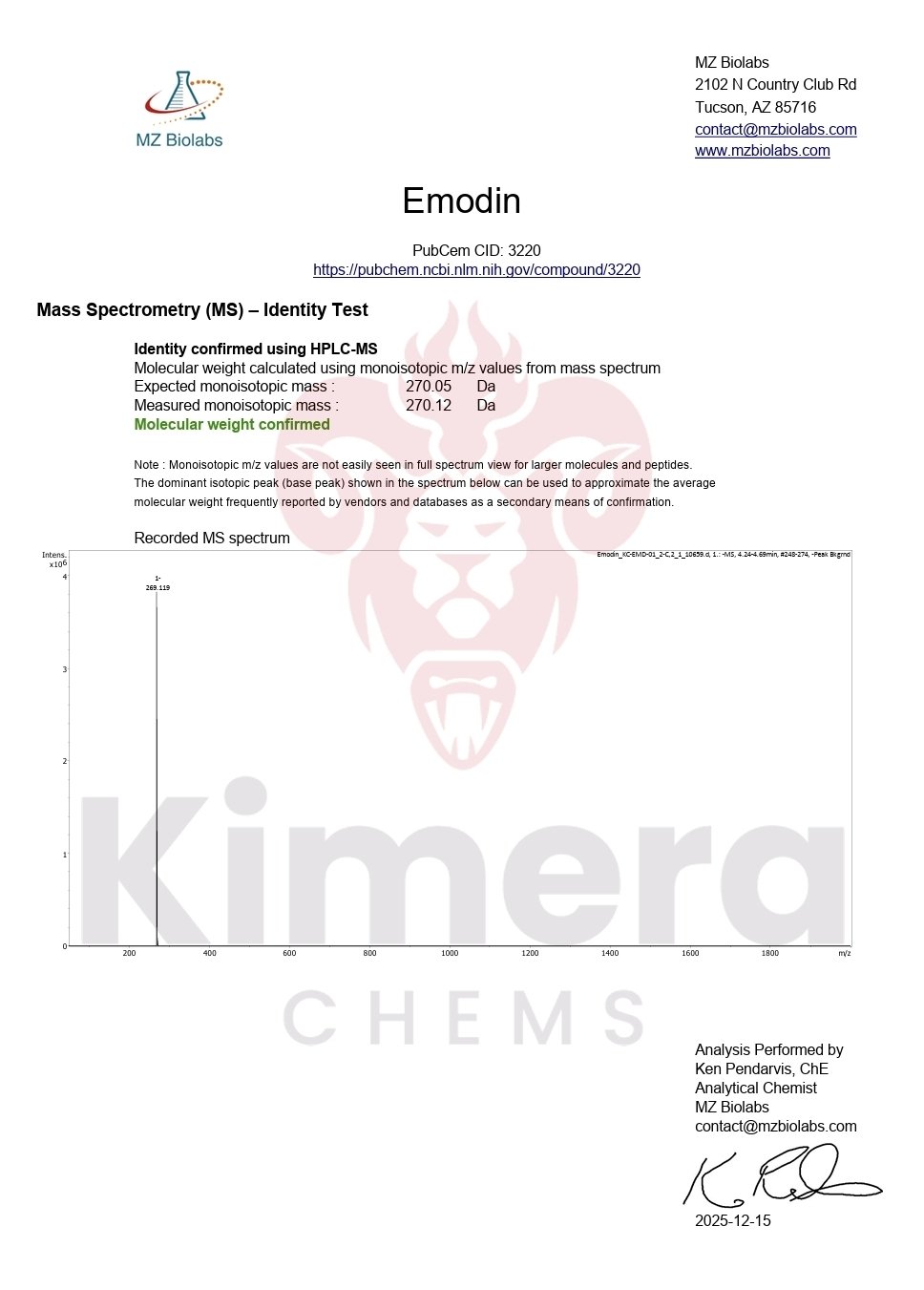

Emodin Overview
Emodin is a naturally occurring anthraquinone compound commonly isolated from plant species such as Rheum palmatum and Polygonum cuspidatum. It has been widely studied in laboratory settings for its interactions with cellular signaling pathways, oxidative stress mechanisms, and metabolic regulation models.
Due to its planar anthraquinone structure, Emodin exhibits strong bioactivity in vitro, making it a compound of interest for research involving inflammation markers, enzyme modulation, and intracellular communication pathways.
This material is supplied strictly for research and laboratory use only and is not intended for human or veterinary consumption.
Chemical Structure & Molecular Data
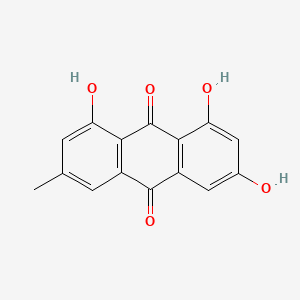
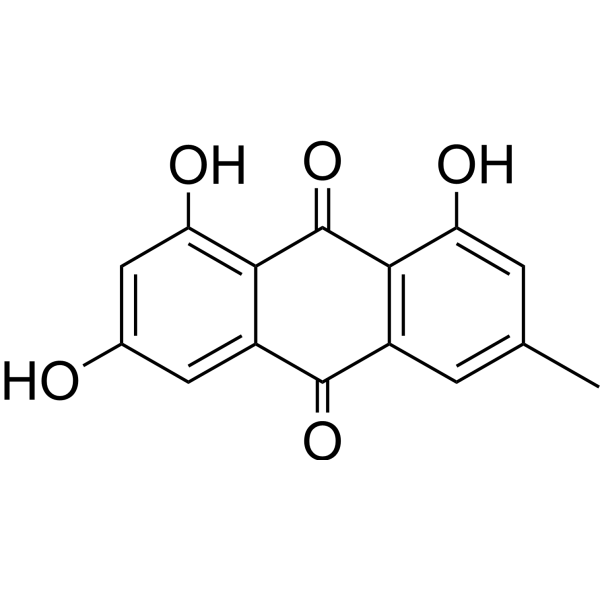
-
Chemical Name: 1,3,8-Trihydroxy-6-methylanthraquinone
-
Molecular Formula: C₁₅H₁₀O₅
-
Molecular Weight: 270.24 g/mol
-
Compound Class: Anthraquinone
-
CAS Number: 518-82-1
-
Appearance: Orange to reddish-orange crystalline powder
The anthraquinone backbone of Emodin contributes to its redox activity and ability to interact with multiple intracellular targets during in-vitro experimentation.
Mechanism of Interest (Research Context)
In laboratory studies, Emodin has been evaluated for its influence on:
-
Cellular oxidative stress response pathways
-
Inflammatory signaling cascades
-
Kinase and phosphatase modulation
-
Mitochondrial function models
-
Metabolic enzyme activity
Its multifunctional profile makes Emodin a recurring reference compound in biochemical and molecular biology research environments.
Physical & Chemical Properties
-
Solubility: Poorly soluble in water; soluble in DMSO and ethanol
-
Stability: Stable under dry, cool, and light-protected storage conditions
-
Melting Point: ~255–257 °C
Proper solvent selection is critical when preparing Emodin for experimental applications.
Common Research Applications
Emodin is frequently utilized in research involving:
-
Inflammation and cytokine signaling models
-
Oxidative stress and ROS studies
-
Enzyme inhibition screening
-
Metabolic and mitochondrial research
-
Comparative anthraquinone analysis
Storage & Handling
-
Store in a cool, dry location
-
Protect from light and moisture
-
Seal tightly when not in use
Use appropriate laboratory PPE when handling.
Research Use Disclaimer
This product is not a dietary supplement, drug, or food additive.
It is sold exclusively for laboratory and research purposes.
Not for human or animal consumption.
| CAS Number | 518-82-1 |
| Other Names | 1,3,8-Trihydroxy-6-methylanthracene-9,10-dione |
| Molecular Formula | C15H10O5 |
| Molecular Weight | 270.24 |
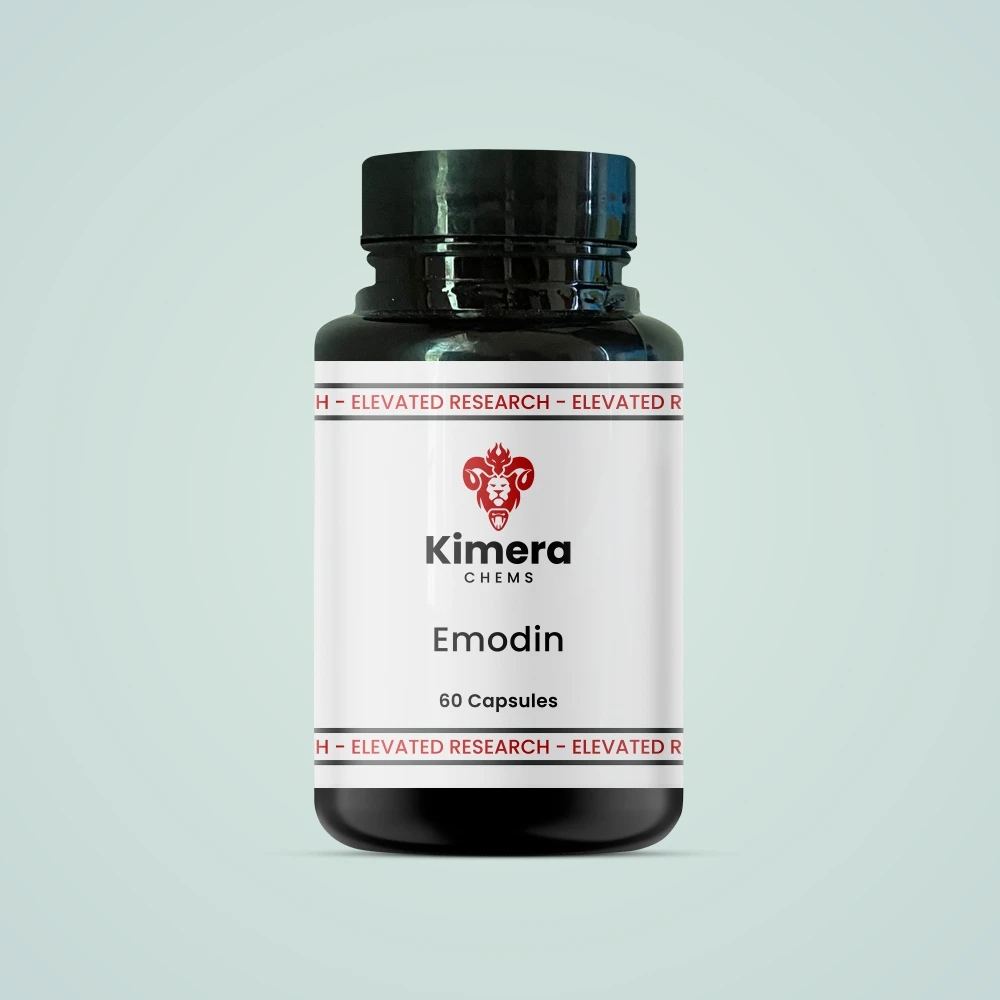
| Dry-Fill Capsule Concentration | 250mg |