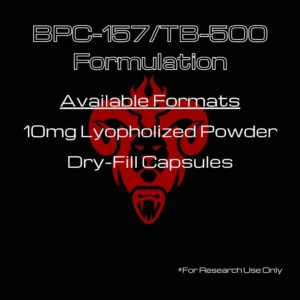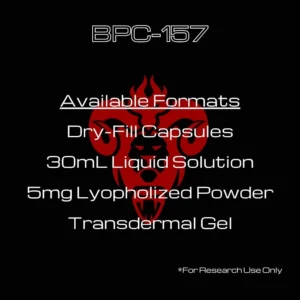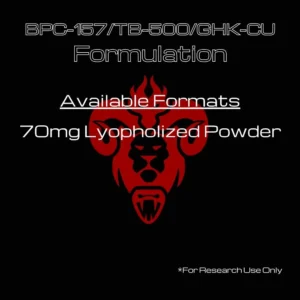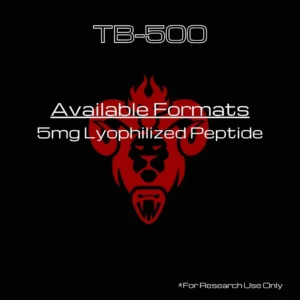
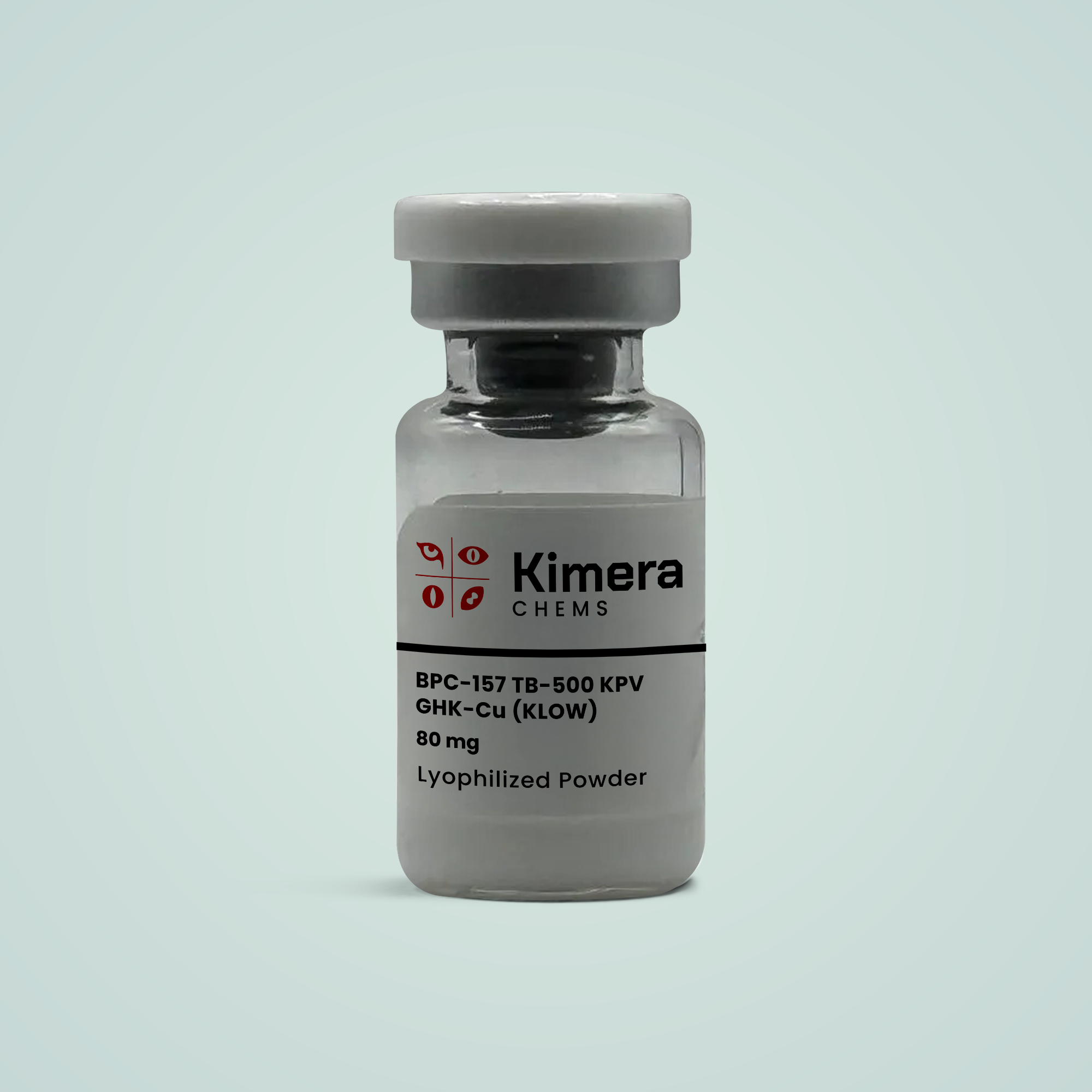
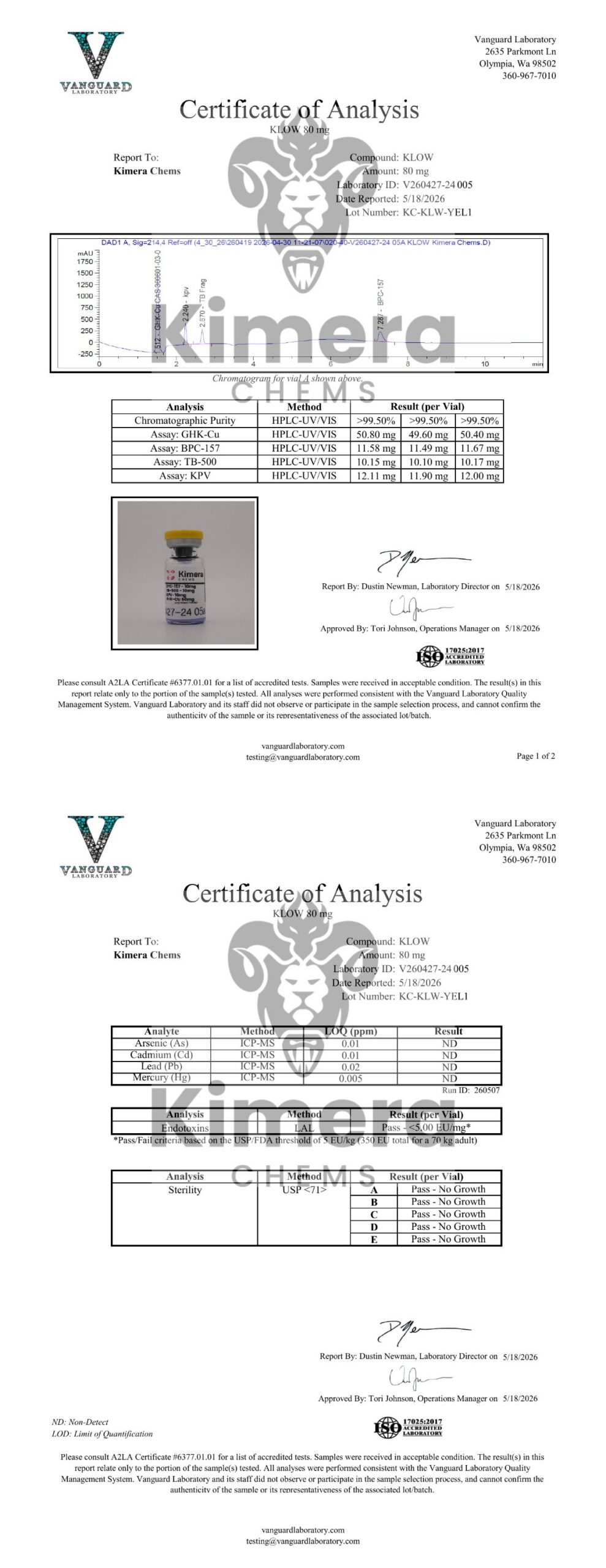
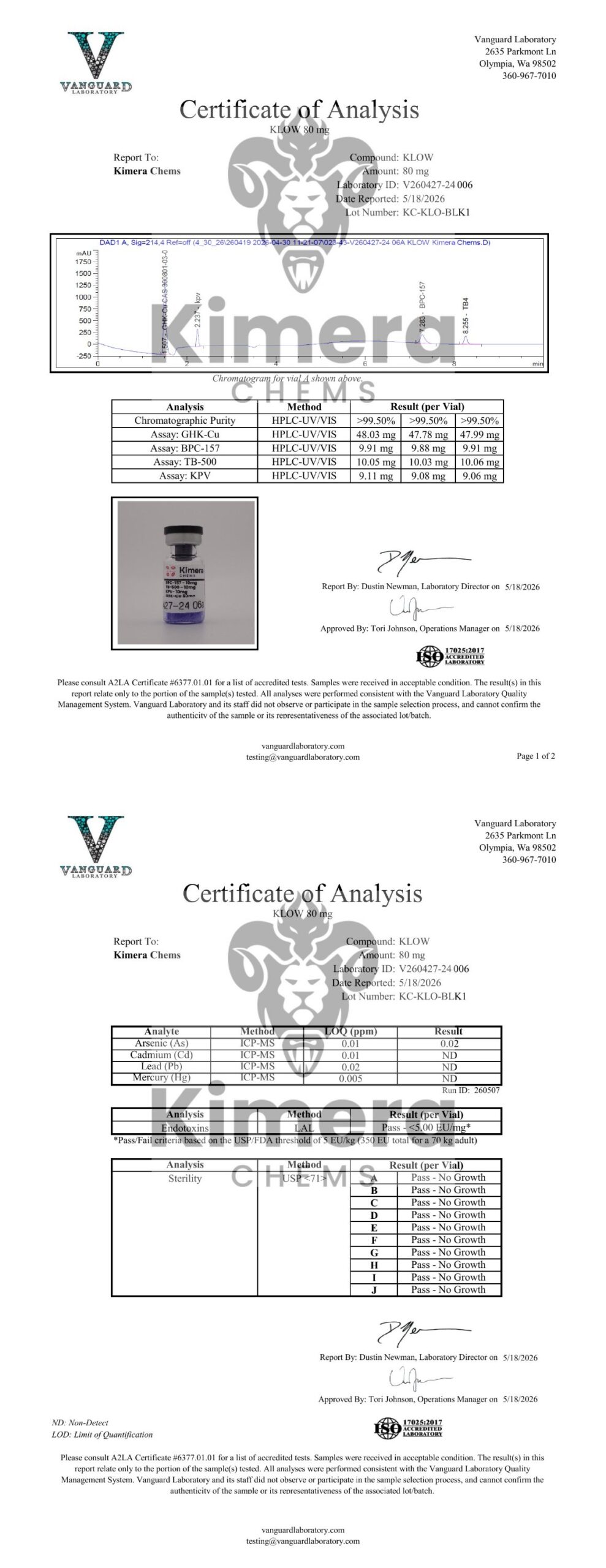

The KLOW Peptide Blend is a specific research-grade formulation. This is a multi-component formulation for laboratory use. It contains four distinct synthetic peptides: KPV, BPC-157, TB-500, and GHK-Cu. Scientists classify these as investigational peptides. Researchers study this molecule to map concurrent receptor interactions in complex cellular environments. The primary focus involves the molecular association between these peptides and various signaling pathways. Scientists can study them together in a single in vitro system. This allows for analysis of complex signaling networks.
Chemical Composition & Purity
The KLOW blend is supplied as a lyophilized powder. The final mixture is a homogeneous, off-white to pale blue substance. It consists of four high-purity peptides in a defined ratio.
Individual Components:
- KPV: It is a tripeptide with the sequence Lys-Pro-Val. It appears as a white powder.
- BPC-157: It is a pentadecapeptide. Its chemical formula is C₆₂H₉₈N₁₆O₂₂. . It appears as a white to off-white powder.
- TB-500 (synthetic version of Thymosin β4): It is a 43-amino acid peptide. Its formula is C₂₁₂H₃₅₀N₅₆O₇₈S. It appears as a white powder.
- GHK-Cu: It is a copper-bound tripeptide (Gly-His-Lys). It appears as a blue to blue-green powder.
Blend Specification:
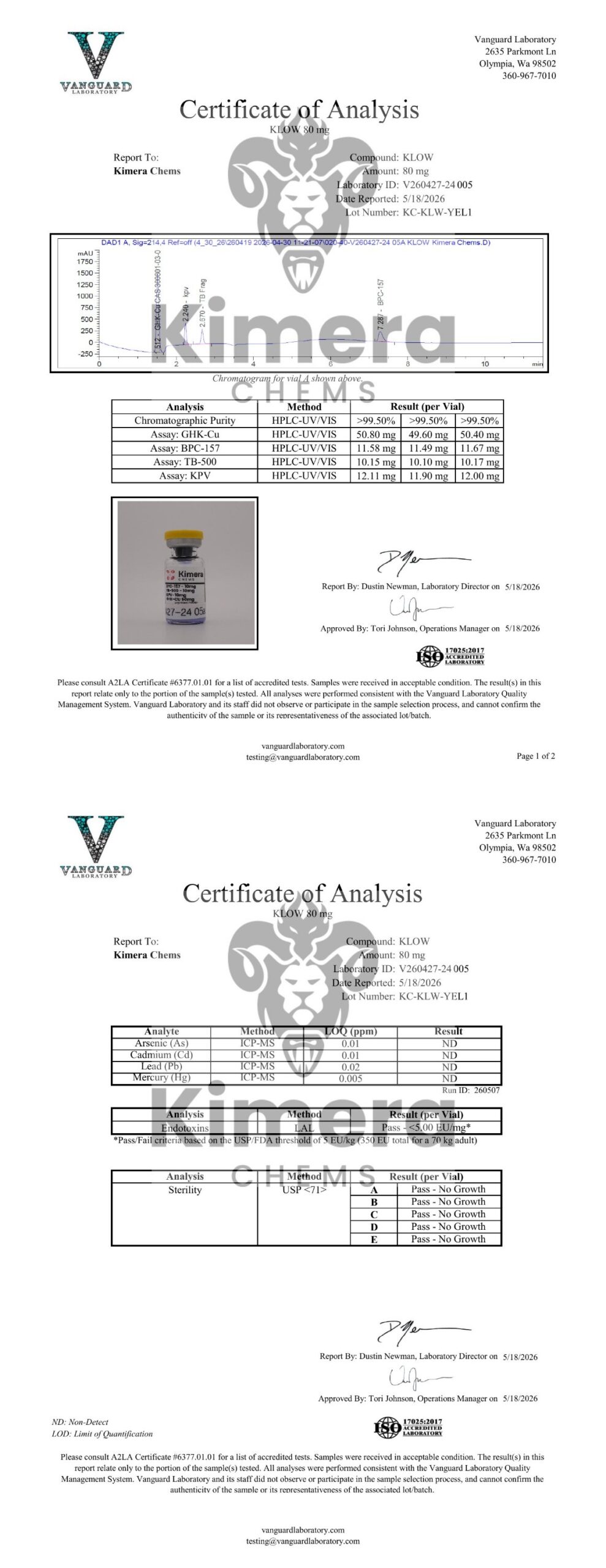
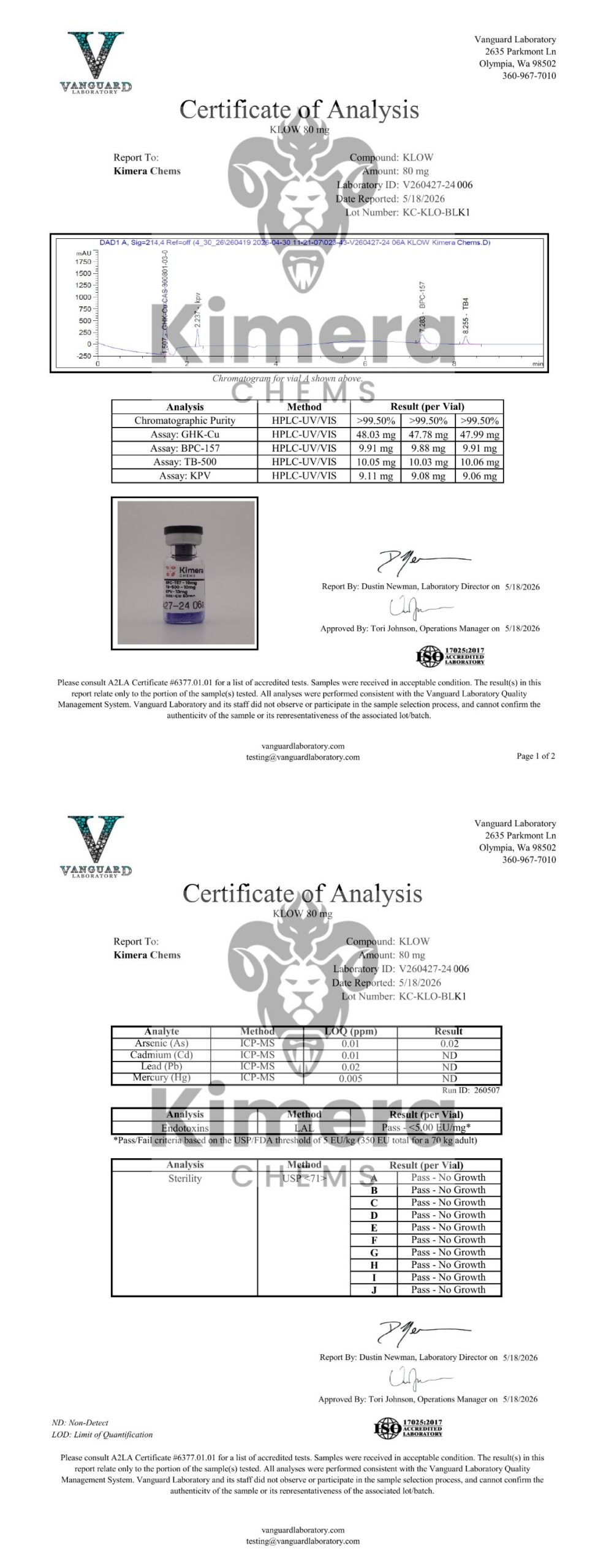
Kimera Chems verifies each component before blending. The final blend purity for each peptide is ≥98%, confirmed by HPLC. The precise mass ratio of the four peptides is specified in the product documentation. This ensures consistent composition for reproducible research.
Research Applications
Researchers use the KLOW blend to examine multiple pathways simultaneously. Each peptide is studied for a different molecular interaction. KPV is analyzed for its potential role in inflammatory signaling modulation. BPC-157 is researched for interactions with growth factor and nitric oxide pathways. TB-500 is studied for potential effects on cytoskeletal organization based on similarity to thymosin beta-4. GHK-Cu is analyzed for its copper-dependent interaction with extracellular matrix components.
- Multi-Pathway Cell Studies: For parallel signaling analysis.
- Comparative Mechanism Research: Contrasting different peptide actions.
- Complex In Vitro Modeling: Use in advanced tissue culture systems.
- Synergistic Effect Analysis: Studying combined molecular interactions.
- Control for Blend Studies: As a benchmark in formulation research.
Storage & Handling Protocol
Correct storage is vital for this complex peptide blend.
- Lyophilized peptides can be kept at room temperature, away from direct light.
- If reconstituted, the sample should be kept in the fridge.
- For long-term storage, the material must be stored in the freezer.
- Keep in an airtight container with desiccant.
- Store in an opaque vial, especially for GHK-Cu.
- Take out the amount needed for a single use and avoid freeze-thaw.
- Use sterile buffers and a laminar flow hood.
Compliance & Usage Disclaimer
This product is for Research Use Only (RUO). It is a chemical blend for laboratory analysis. It is not for human or animal consumption. It is not a drug, supplement, or cosmetic. All materials, including bpc 157 and tb 500 are for authorized research.
Availability & Research Sourcing
Kimera Chems is the best place to buy bpc 157 and other specialized peptide formulations like KLOW. Researchers can source this blend for multi-target studies. This product is for qualified institutional use. Scientists can find detailed ratio and purity data on our platform for their BPC 157 purchase and evaluation of the complete blend.
No product specifications available.