
RAD-140 / YK-11 Solution Overview
This research solution contains two structurally distinct synthetic androgen receptor ligands supplied together in a stabilized solvent system: RAD-140 (also known by the International Nonproprietary Name vosilasarm), a nonsteroidal benzonitrile-oxadiazole selective androgen receptor modulator (SARM) originally developed by Radius Health and currently in active clinical development by Ellipses Pharma for hormone-sensitive breast cancer; and YK-11, a synthetic steroidal compound built on a 19-norpregnadiene scaffold. The two compounds represent contrasting chemical classes — one a heterocyclic nonsteroidal AR ligand, the other a modified steroidal scaffold — and are sometimes referenced together in published analytical and structure-activity literature comparing steroidal versus nonsteroidal androgen receptor modulators.
This solution is supplied strictly for laboratory and analytical research purposes. Neither compound is approved for human or veterinary use.
Compound Identification
RAD-140 (vosilasarm / Testolone)
- Chemical Name: 2-Chloro-4-[[(1R,2S)-1-[5-(4-cyanophenyl)-1,3,4-oxadiazol-2-yl]-2-hydroxypropyl]amino]-3-methylbenzonitrile
- Synonyms: RAD-140; RAD140; Testolone; Vosilasarm (INN); EP0062
- CAS Number: 1182367-47-0
- Molecular Formula: C₂₀H₁₆ClN₅O₂
- Molecular Weight: 393.83 g/mol
- PubChem CID: 44200882
- Structural class: Nonsteroidal benzonitrile / 1,3,4-oxadiazole SARM
YK-11
- Chemical Name: Methyl (17α,20E)-17,20-[(1-methoxyethylidene)bis(oxy)]-3-oxo-19-norpregna-4,20-diene-21-carboxylate
- Synonyms: YK11; Myostine
- CAS Number: 1370003-76-1
- Molecular Formula: C₂₅H₃₄O₆
- Molecular Weight: 430.54 g/mol
- UNII: Z9748J6B0R
- Structural class: Steroidal — 19-norpregnadiene derivative; structurally related to dihydrotestosterone (DHT)
Mechanism of Action (Research Context)
The two compounds in this solution represent mechanistically and structurally distinct AR ligand classes:
- RAD-140 binds the androgen receptor ligand-binding domain with high affinity (reported K_i ≈ 7 nM) and acts as a tissue-differential AR ligand. Published in vitro and preclinical characterizations describe differential transcriptional output across androgen-responsive cell types and ongoing oncology research interest in AR-positive hormone-sensitive breast cancer.
- YK-11 acts as a gene-selective partial agonist of the androgen receptor. Published in vitro work (Kanno et al., 2011) reported that YK-11 does not induce the N/C-terminal interaction required for full AR transactivation, producing a distinct transcriptional profile relative to DHT and other steroidal androgens. Subsequent reports describe in vitro effects on follistatin expression in C2C12 myoblast cultures, though the broader follistatin/myostatin-pathway findings have not been independently replicated across multiple research groups.
The two compounds together may be referenced in analytical chemistry and comparative pharmacology contexts as examples of structurally divergent AR ligands within a combined research panel.
Formulation Composition
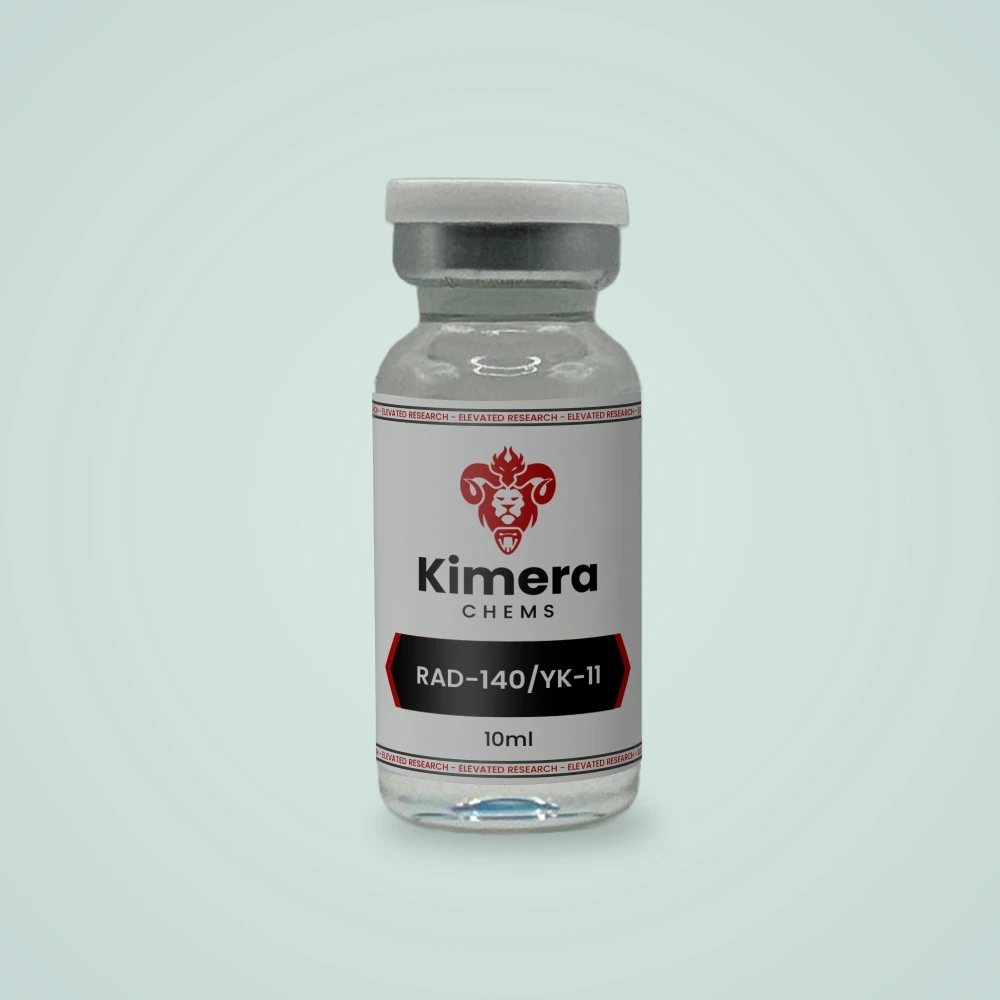
- RAD-140 concentration: 25 mg/mL
- YK-11 concentration: 25 mg/mL
- Total volume: 10 mL
- Solvent system: PEG-400, PEG-300, benzyl benzoate, benzyl alcohol
The solvent system is selected to support solubility and stability of lipophilic small-molecule AR ligands in laboratory research applications.
Physical and Chemical Properties
- Appearance: Clear to lightly tinted viscous solution
- Solubility: Pre-formulated for direct use in DMSO- or PEG-compatible experimental systems
- Stability: Stable under controlled storage conditions when protected from light
- Recommended storage: Refrigerated (2–8 °C); do not freeze
- Identity verification: Each batch is supplied with batch-specific Certificates of Analysis confirming concentration and identity of both active components by HPLC and/or mass spectrometry against the cited molecular ions ([M+H]⁺ ≈ 394.1 for RAD-140; [M+H]⁺ ≈ 431.5 for YK-11)
Research Focus Areas
This solution may be referenced in laboratory research involving:
- Comparative AR ligand pharmacology — steroidal versus nonsteroidal scaffolds within a single experimental matrix
- Analytical method development and chromatographic separation of mixed SARM analyte panels (relevant to anti-doping analytical chemistry literature)
- Structure-activity relationship (SAR) analysis across distinct AR ligand chemical classes
- In vitro receptor binding and transactivation studies referencing multiple AR ligand chemotypes
- Forensic toxicology and metabolite identification research
Research Background & Regulatory Context
Both RAD-140 and YK-11 are included on the World Anti-Doping Agency (WADA) Prohibited List under the anabolic agents category. RAD-140 (vosilasarm) is in active Phase 1+ clinical development through Ellipses Pharma for AR-positive hormone-sensitive breast cancer. The U.S. Food and Drug Administration has issued multiple public consumer advisories naming RAD-140 and SARMs more broadly in the context of unapproved bodybuilding and dietary supplement products. YK-11 has been documented in analytical literature as a designer-drug analyte requiring inclusion in SARM screening panels. The published literature on RAD-140 also includes case reports addressing hepatotoxicity and cardiovascular effects associated with non-medical use. This published regulatory, clinical, and analytical record reinforces that this product is supplied strictly as a research reagent for laboratory and analytical use, not for therapeutic, performance, dietary supplement, or any other consumer application.
Research Use Disclaimer
This product is intended strictly for laboratory research use only (RUO). Not for human consumption, clinical use, veterinary use, therapeutic application, dietary supplement use, or diagnostic purposes. All handling and use must comply with applicable federal, state, and local laws and institutional laboratory safety standards.
No product specifications available.