
Oxytocin is a synthetic peptide used in research laboratories. It is a cyclic peptide consisting of nine amino acids with a disulfide bridge between two cysteine residues. This structure creates a ring that is characteristic of this molecule. Scientists study Oxytocin for its structural properties and receptor interactions. The primary focus of research involves its structural binding to the oxytocin receptor (OXTR). Researchers analyze this material to understand peptide folding and binding mechanisms. The presence of sulfur atoms in the structure allows for disulfide bond formation. Investigators use this compound in controlled in vitro models to examine receptor-ligand docking. The cyclic structure makes it stable for various research applications. All experimental work involving this molecule is performed in professional laboratory environments.
Chemical Composition & Purity
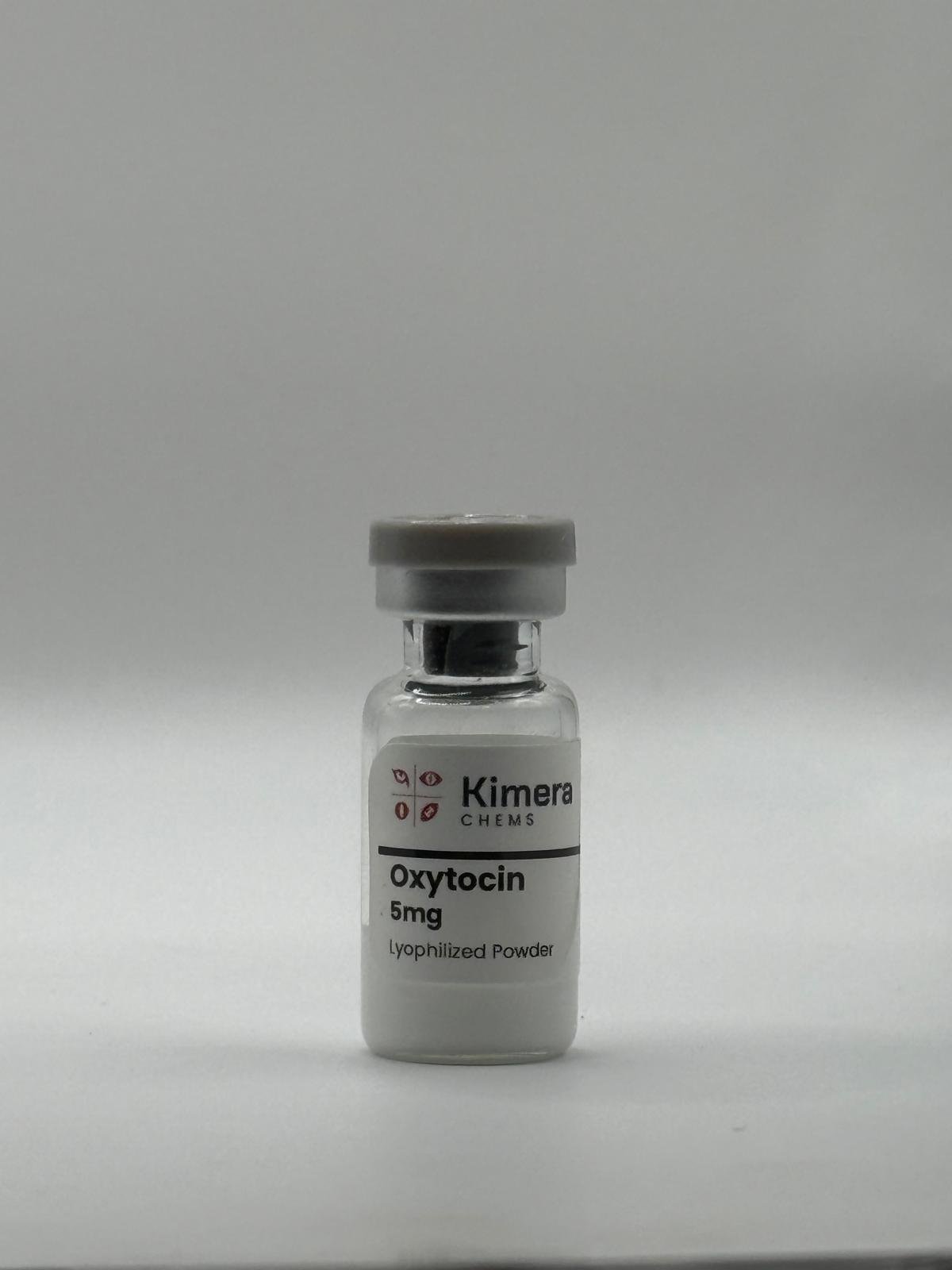
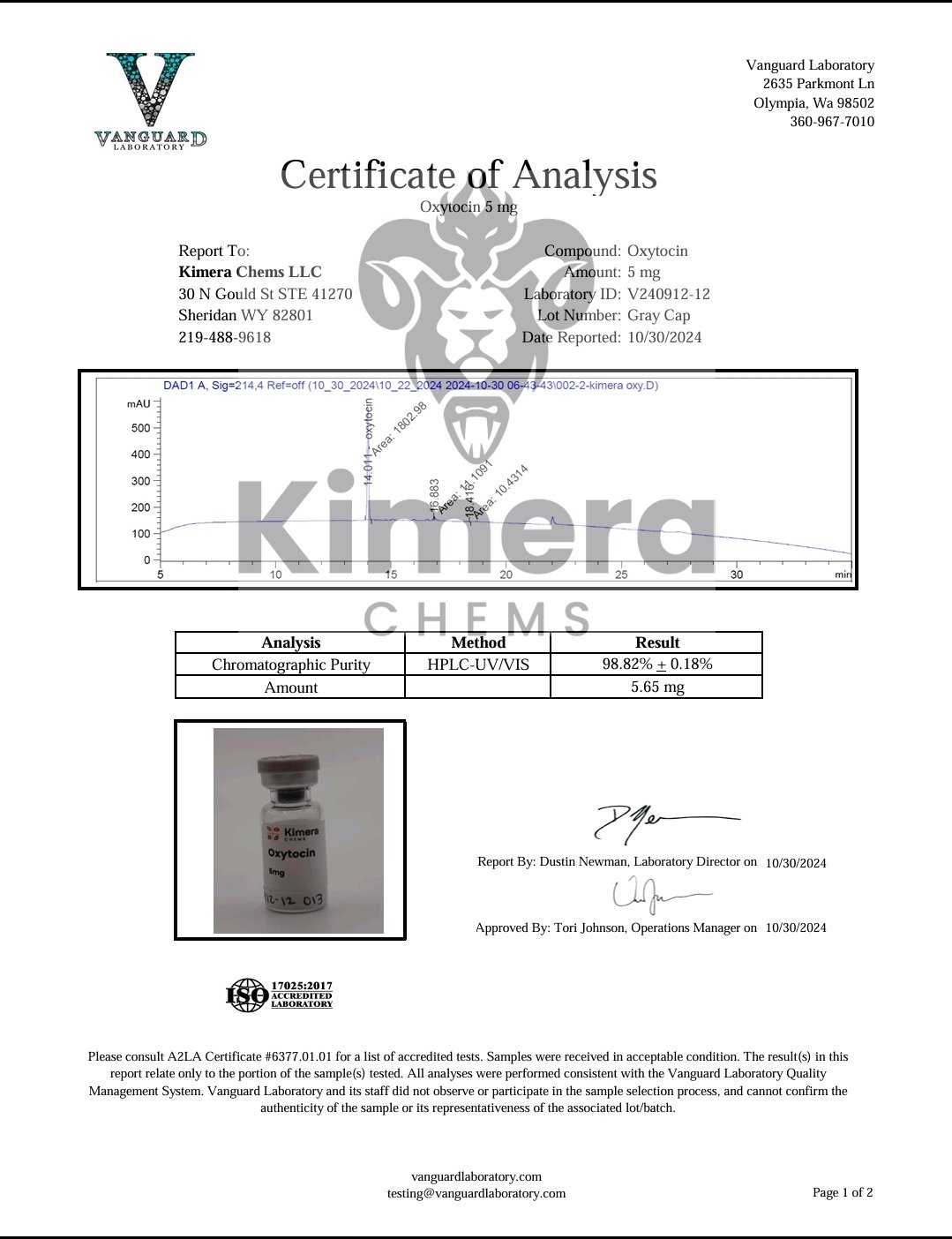
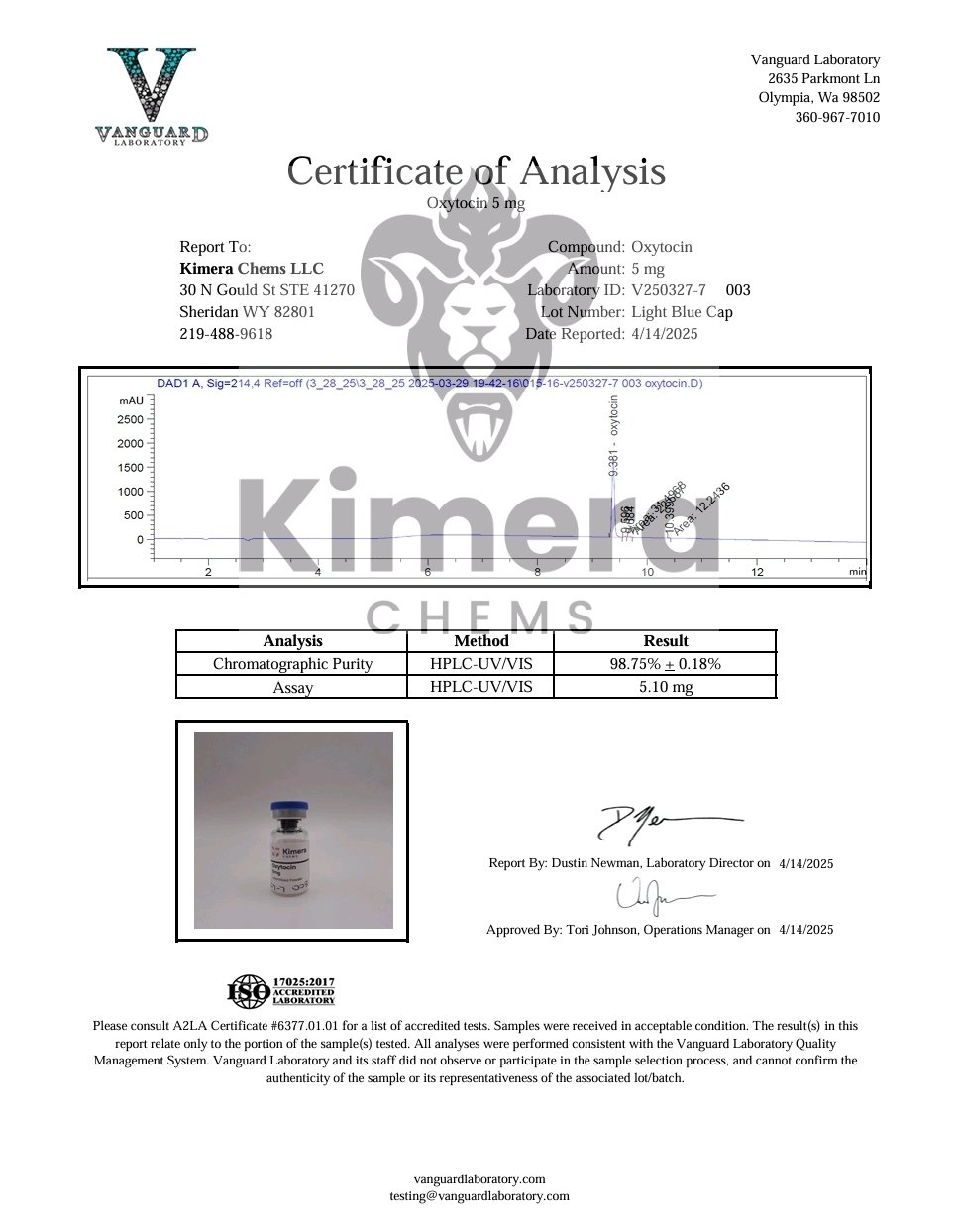
This compound is available as a 5mg lyophilized peptide. Its molecular formula is C₄₃H₆₆N₁₂O₁₂S₂. The product’s molecular weight is 1007.2 g/mol. The compound appears as a white solid. Kimera Chems verifies each batch for quality through third-party testing. They perform high-performance liquid chromatography (HPLC). For analysis. This test confirms the compound’s identity and purity. The purity level is documented as ≥98%, suitable for research purposes.
Research Applications
In laboratory science, investigators use this peptide to study receptor pathways. The mechanism involves looking at how the cyclic structure binds to the OXTR receptor site. Scientists use controlled in vitro experiments to analyze these interactions carefully.
- Receptor Binding Studies: Investigators measure the affinity of the peptide for specific receptor models.
- Molecular Interaction Mapping: Researchers observe the physical fit of the peptide in receptor pockets.
- In Vitro Modeling: Lab teams use the compound to study signaling in cell cultures.
- Pathway Signaling Research: Scientists evaluate the chemical steps that follow peptide-receptor association.
- Structural Stability Tests: Researchers check how the disulfide bridge maintains the peptide shape in solutions.
Storage & Handling Protocol
Keeping this research material stable is important for getting accurate results. Researchers must follow these simple laboratory rules to keep the peptide stable during storage:
- Lyophilized peptides can be kept at room temperature, away from direct light.
- If reconstituted, the sample should be kept in the fridge.
- For long-term storage, the material must be stored in the freezer.
- Use airtight containers with a desiccant to keep it dry.
- Make sure the lid is always closed tight after use.
- Use sterile equipment when handling the powder.
Compliance & Usage Disclaimer
This product is for Research Use Only (RUO). It is a chemical for non-clinical lab analysis by experts. It is not for human or animal use. It is not a drug, food, or supplement. Any Oxytocin for sale is strictly for qualified institutional researchers.
Availability & Research Sourcing
Kimera Chems is a reliable source of high-quality lab-used chemicals. You can buy Oxytocin and other premium research compounds, SARMs, premium nootropics, and essential amino acids from our website. Our team gives you the analytical reports you need for your records.
| CAS Number | 50-56-6 |
| Other Names | Pitocin, Endopituitrina, Ocytocin |
| IUPAC Name | (2S)-1-[(4R,7S,10S,13S,16S,19R)-19-amino-7-(2-amino-2-oxoethyl)-10-(3-amino-3-oxopropyl)-13-[(2S)-butan-2-yl]-16-[(4-hydroxyphenyl)methyl]-6,9,12,15,18-pentaoxo-1,2-dithia-5,8,11,14,17-pentazacycloicosane-4-carbonyl]-N-[(2S)-1-[(2-amino-2-oxoethyl)amino]-4-methyl-1-oxopentan-2-yl]pyrrolidine-2-carboxamide |
| Molecular Formula | C₄₃H₆₆N₁₂O₁₂S₂ |
| Molecular Weight | 1007.2 |