

L-Tetrahydropalmatine (L-THP) Overview
L-Tetrahydropalmatine (L-THP) is a naturally occurring isoquinoline alkaloid originally isolated from plants of the Corydalis genus. It has been extensively studied in laboratory research for its effects on dopaminergic and serotonergic signaling pathways, as well as its role in neurochemical modulation related to stress, reward, and behavioral regulation.
L-THP is the levorotatory enantiomer of tetrahydropalmatine and is the stereoisomer most frequently examined in neuropharmacology research due to its distinct receptor interaction profile.
L-Tetrahydropalmatine is not approved for human or veterinary use and is supplied strictly for laboratory and analytical research purposes.
Mechanism of Action
L-THP is investigated as a dopamine receptor modulator, with research indicating antagonist or partial antagonist activity at dopamine D₂ and D₃ receptors. Additional interactions with serotonergic and adrenergic receptors have been reported in experimental models.
In laboratory research, L-THP is commonly studied for its effects on:
-
Dopaminergic signaling and reward pathways
-
Neurochemical balance and synaptic modulation
-
Stress- and anxiety-related behavioral models
-
Non-opioid modulation of central nervous system activity
Its multi-receptor profile makes L-THP useful for studying complex neurochemical signaling networks rather than single-target mechanisms.
Chemical Structure
 Chemical Name:
(−)-Tetrahydropalmatine
Synonyms:
L-THP, Levo-tetrahydropalmatine
Molecular Formula:
C₂₁H₂₅NO₄
Molecular Weight:
355.43 g/mol
CAS Number:
2934-97-6
Structural Description:
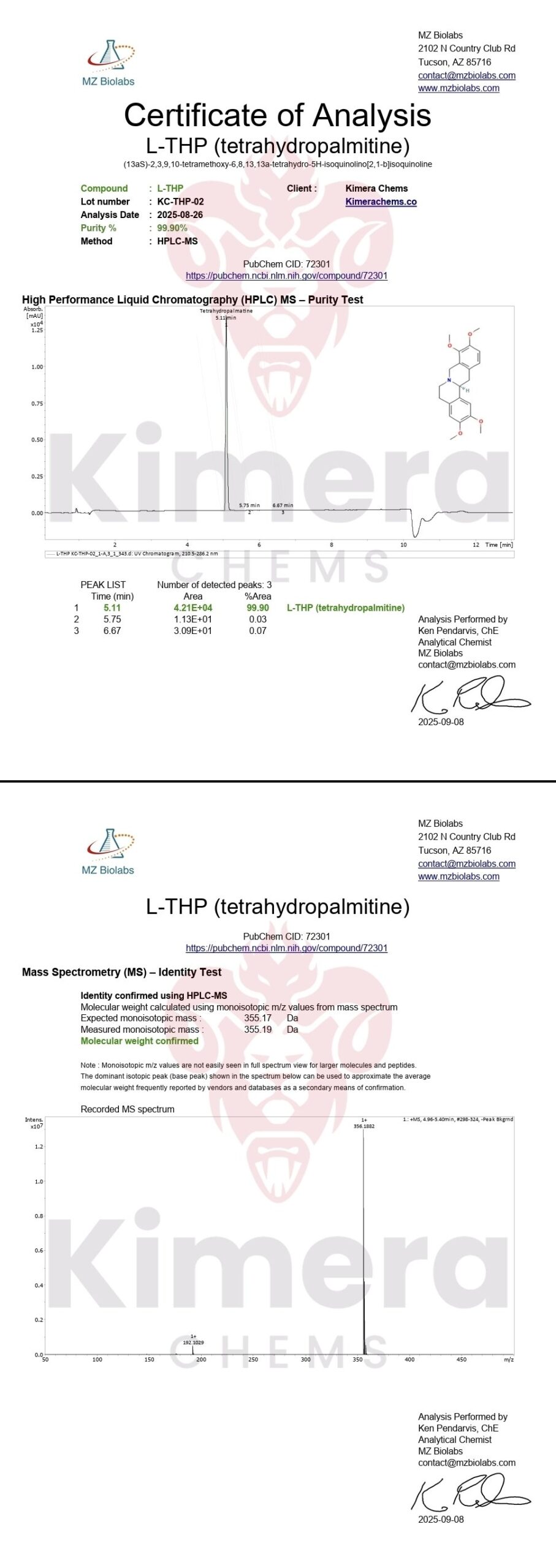
L-Tetrahydropalmatine is a tetracyclic isoquinoline alkaloid featuring multiple methoxy substituents and a saturated heterocyclic core. This rigid aromatic framework contributes to its receptor binding behavior and central nervous system activity observed in laboratory research. Structural identification and molecular data are available via PubChem.
Physical and Chemical Properties
-
Appearance: White to off-white crystalline powder
-
Solubility: Limited aqueous solubility; soluble in organic solvents
-
Stability: Stable under dry, cool, and light-protected storage conditions
Research Focus Areas
L-Tetrahydropalmatine (L-THP) is commonly examined in laboratory research related to:
-
Dopamine receptor signaling and modulation
-
Neurobehavioral and reward-pathway studies
-
Stress and anxiety research models
-
Neuropharmacology of isoquinoline alkaloids
Research Use Disclaimer
L-Tetrahydropalmatine (L-THP) is intended for research use only.
Not for human consumption, therapeutic use, or diagnostic application. All handling and use must comply with applicable laws, regulations, and laboratory safety standards.
Summary
L-Tetrahydropalmatine (L-THP) is a well-characterized isoquinoline alkaloid with a defined chemical structure and established research relevance in dopaminergic and neurochemical signaling studies. Its multi-receptor interaction profile makes it a valuable research tool for investigating complex CNS modulation and behavioral neuropharmacology.
| CAS Number | 483-14-7 |
| Other Names | L-THP, Rotundine, 5,8,13,13aS-tetrahydro-2,3,9,10-tetramethoxy-6H-dibenzo[a,g]quinolizine |
| IUPAC Name | (13aS)-2,3,9,10-tetramethoxy-6,8,13,13a-tetrahydro-5H-isoquinolino[2,1-b]isoquinoline |
| Molecular Formula | C21H25NO4 |
| Molecular Weight | 355.434 g/mol |
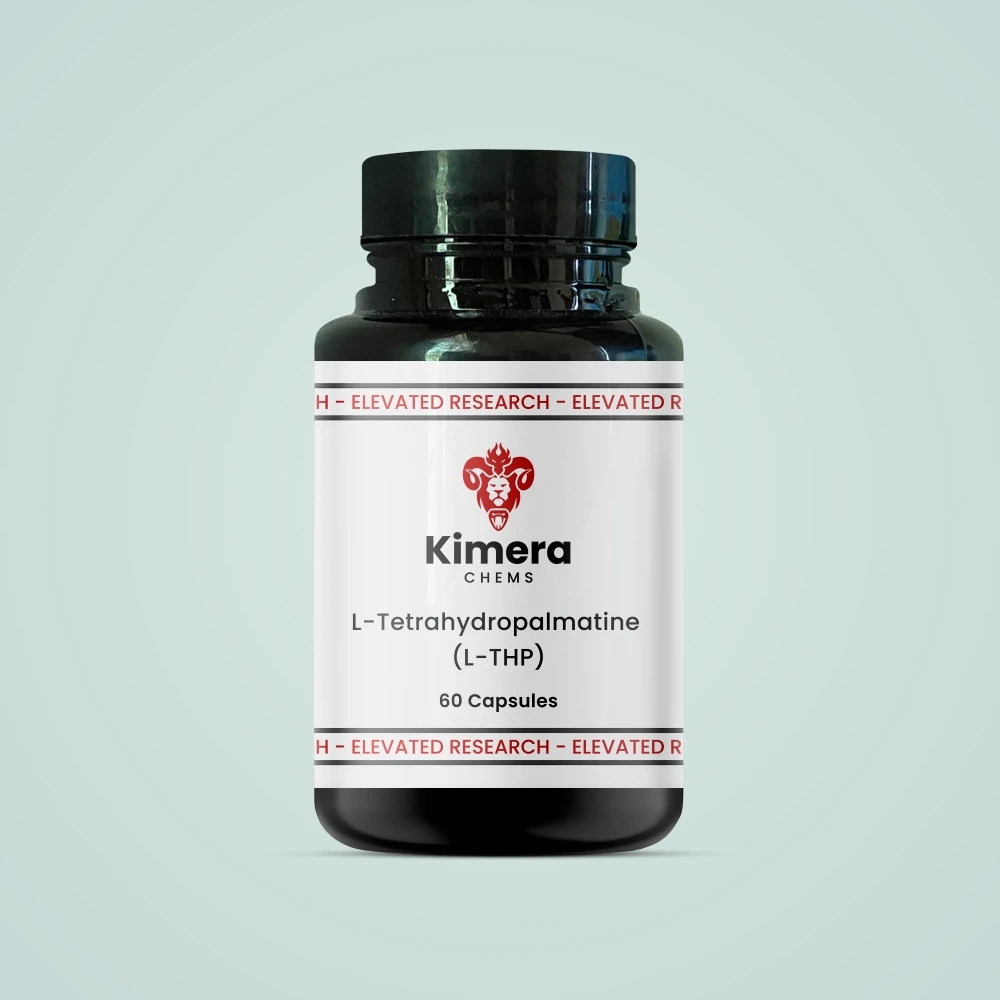
| Dry-Fill Capsule Concentration | 50mg |