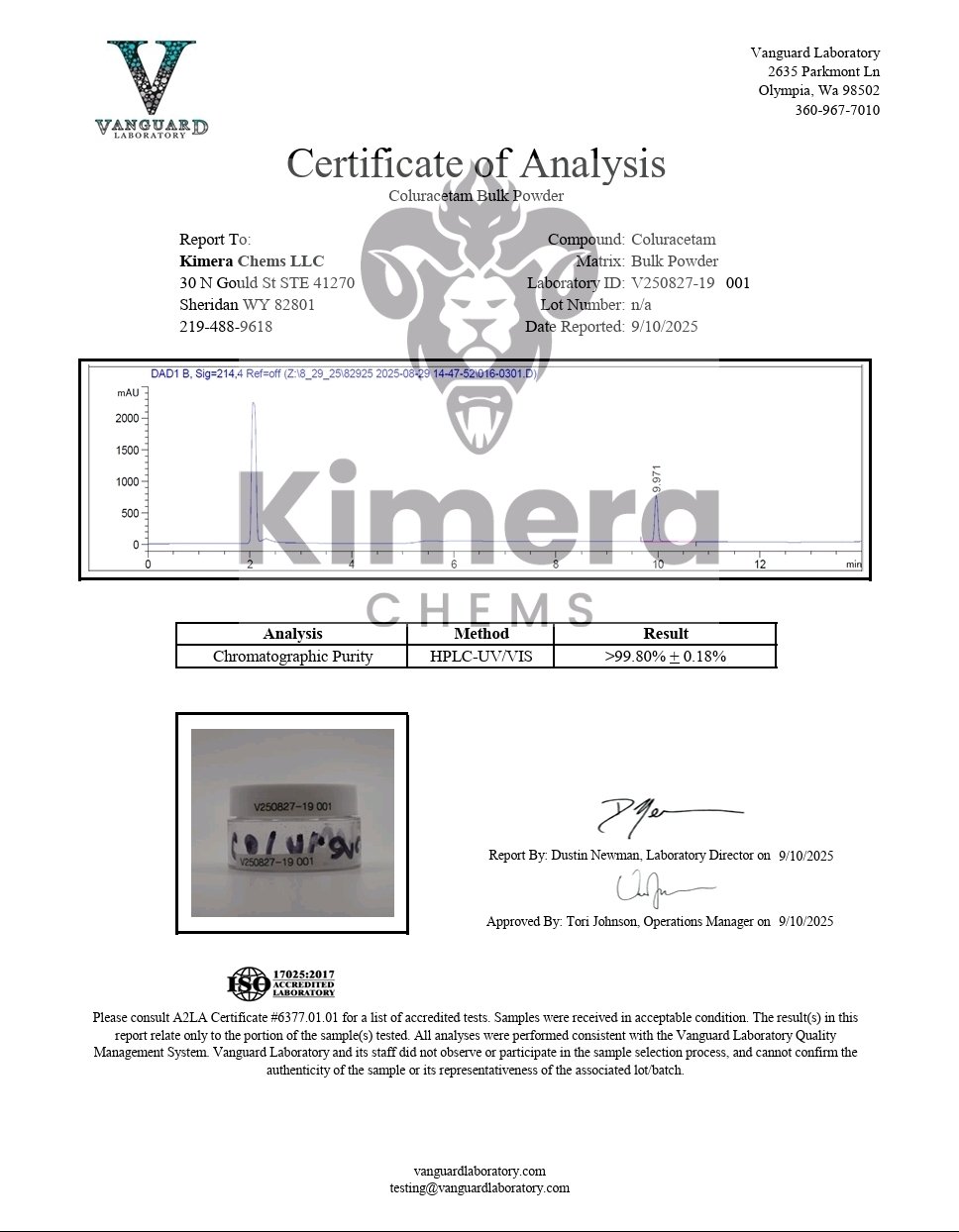
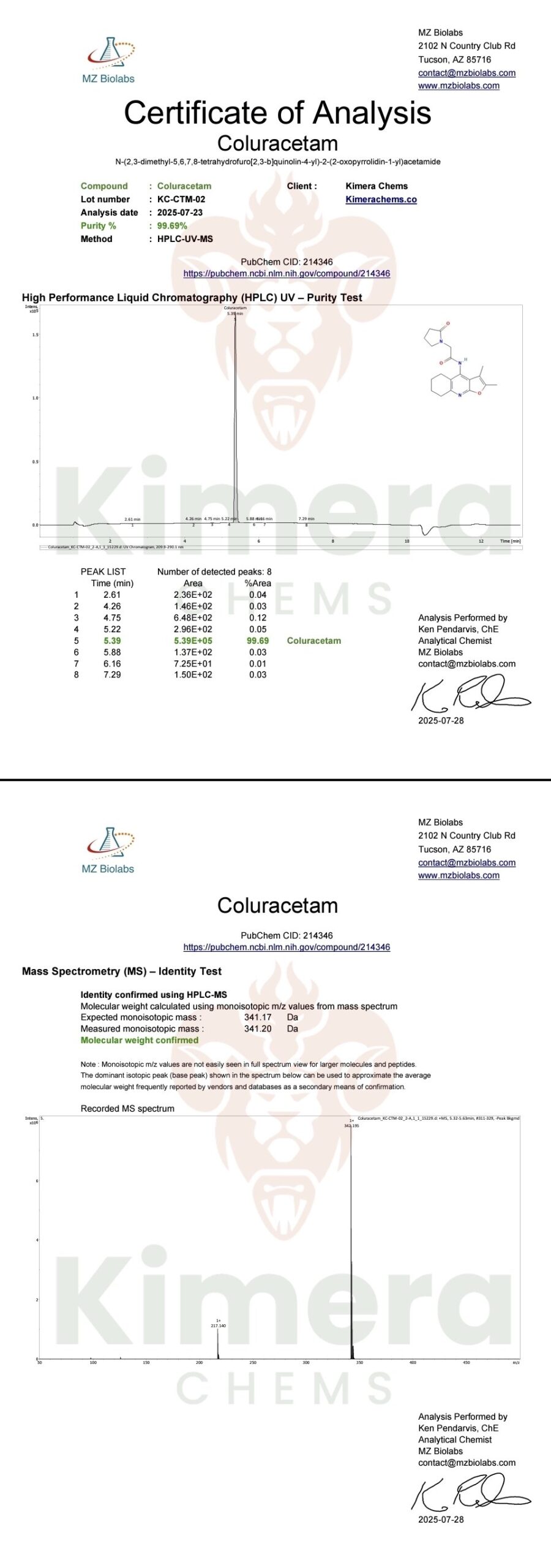

What Is Coluracetam?
Coluracetam (BCI-540) is a synthetic nootropic research compound belonging to the racetam family. Unlike classical racetams, Coluracetam is uniquely studied for its ability to enhance high-affinity choline uptake (HACU) in cholinergic neurons—a critical step in acetylcholine synthesis. This distinct mechanism has made Coluracetam a compound of interest in cognitive, neurochemical, and synaptic plasticity research models.
Mechanism of Action (Research Context)
Coluracetam is primarily investigated for its interaction with cholinergic signaling pathways, particularly:
-
Enhancement of high-affinity choline uptake (HACU)
-
Increased availability of choline for acetylcholine synthesis
-
Modulation of synaptic transmission and plasticity
-
Potential support of neuronal signaling efficiency in research models
This mechanism differentiates Coluracetam from other racetams that primarily modulate AMPA or NMDA receptor activity.
Areas of Research Interest
In preclinical and exploratory research settings, Coluracetam has been studied for its potential role in:
-
Cognitive performance and memory signaling pathways
-
Attention and learning models
-
Cholinergic neuron resilience and efficiency
-
Neuroplasticity and synaptic communication
-
Mood and sensory-processing research models
These effects are not established clinical outcomes and remain within experimental research contexts.
Chemical & Physical Characteristics
-
Chemical Class: Racetam derivative
-
Molecular Formula: C₁₉H₂₃N₃O₄
-
Appearance: White to off-white crystalline powder
-
Solubility: Moderately soluble in organic solvents; limited water solubility
-
Stability: Stable under dry, cool, light-protected storage conditions
Comparison to Other Racetams (Research Perspective)
| Compound | Primary Research Focus |
|---|---|
| Piracetam | Membrane fluidity, neurotransmission |
| Aniracetam | AMPA modulation, anxiolytic models |
| Oxiracetam | Neuroplasticity, learning pathways |
| Coluracetam | High-affinity choline uptake (HACU) |
Coluracetam’s cholinergic-specific pathway makes it a unique candidate for targeted acetylcholine research.
Handling & Storage Guidelines
-
Store in a cool, dry environment
-
Protect from light and moisture
-
Keep in a properly labeled research container
-
Use calibrated laboratory equipment for handling
Important Research Use Disclaimer
Coluracetam is sold strictly for research and laboratory use only.
Not for human or veterinary consumption.
Not approved as a drug, dietary supplement, or food additive.
All information provided is for educational and scientific discussion purposes only.
Frequently Asked Questions (FAQ)
Is Coluracetam the same as other racetams?
No. While structurally related, Coluracetam is studied for a distinct cholinergic mechanism not shared by most racetams.
Does Coluracetam affect acetylcholine directly?
Research suggests it may enhance the uptake of choline, indirectly influencing acetylcholine synthesis pathways.
Is Coluracetam water soluble?
It shows limited water solubility and is more commonly handled using appropriate laboratory solvents.
| CAS Number | 135463-81-9 |
| Other Names | 135463-81-9, MKC-231, bci-540, UNII-V6FL6O5GR7, V6FL6O5GR7, MKC 231, D01MHI, CHEMBL37935, SCHEMBL194780, DTXSID60159386, EX-A739 |
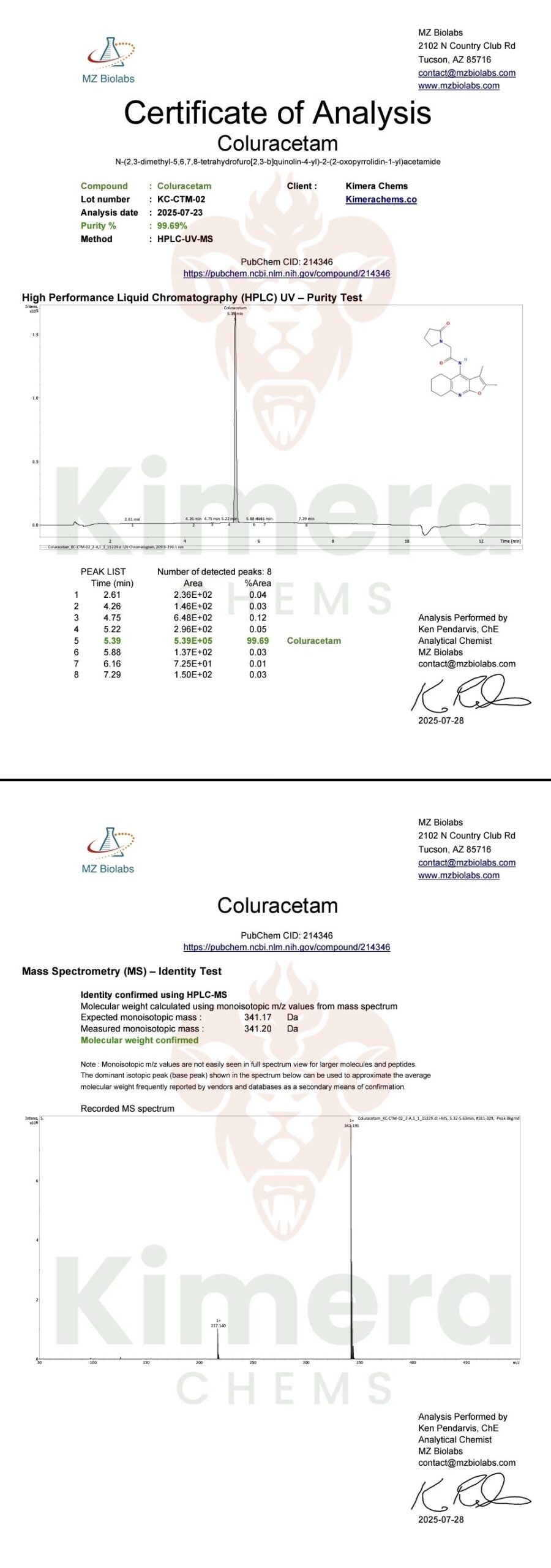
| IUPAC Name | N-(2,3-dimethyl-5,6,7,8-tetrahydrofuro[2,3-b]quinolin-4-yl)-2-(2-oxopyrrolidin-1-yl)acetamide |
| Molecular Formula | C₁₉H₂₃N₃O₃ |
| Molecular Weight | 341.4 |
| Dry-Fill Capsule Concentration | 30mg |
| Liquid Concentration And Solution | NA |
| Aliquot Concentration And Solution | NA |