
Sermorelin Overview
Sermorelin is a synthetic peptide analog of growth hormone–releasing hormone (GHRH) corresponding to the first 29 amino acids of endogenous human GHRH. It is designed to stimulate the anterior pituitary to release growth hormone (GH) in a physiologic, pulsatile manner in experimental systems.
In laboratory research, sermorelin is widely used to study GH axis regulation, pituitary responsiveness, endocrine feedback loops, and age-related changes in growth hormone signaling.
Sermorelin is not approved for human or veterinary use in this context and is supplied strictly for laboratory and analytical research purposes.
Mechanism of Action
Sermorelin functions as a GHRH receptor (GHRH-R) agonist. In experimental models, binding to GHRH receptors on pituitary somatotrophs results in:
-
Stimulation of endogenous growth hormone secretion
-
Activation of cAMP/PKA signaling pathways
-
Preservation of physiologic GH pulsatility
-
Engagement of normal hypothalamic–pituitary feedback mechanisms
Unlike direct GH administration, sermorelin is studied for its ability to stimulate the body’s own GH production rather than replacing the hormone itself.
Chemical Structure


Chemical Name:
Sermorelin (GHRH 1–29)
Synonyms:
Sermorelin acetate (common salt form)
Peptide Type:
Synthetic GHRH analog peptide
Peptide Length:
29 amino acids
Peptide Sequence:
Tyr–Ala–Asp–Ala–Ile–Phe–Thr–Asn–Ser–Tyr–Arg–Lys–Val–Leu–Gly–Gln–Leu–Ser–Ala–Arg–Lys–Leu–Leu–Gln–Asp–Ile–Met–Ser–Arg
Molecular Weight (peptide):
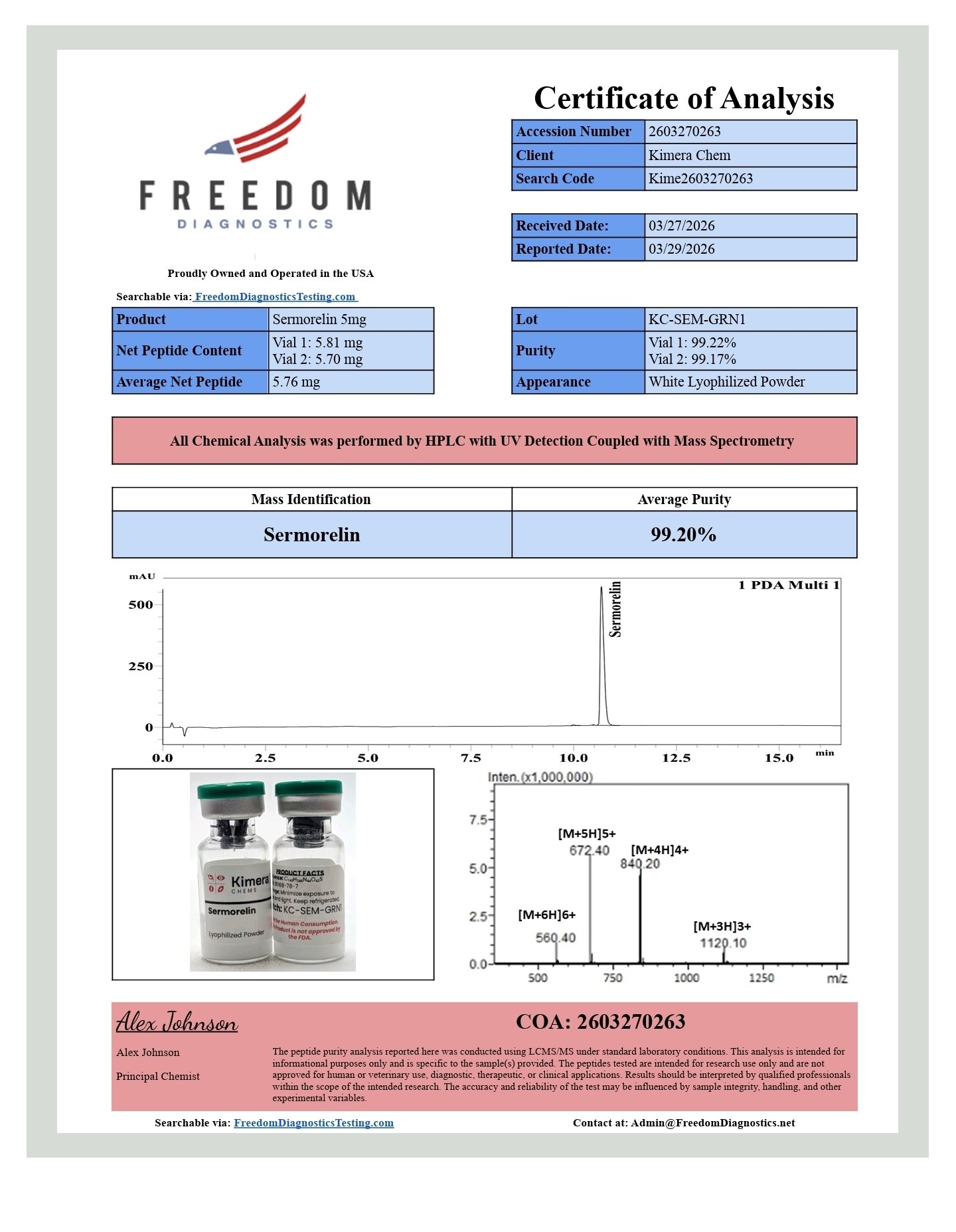
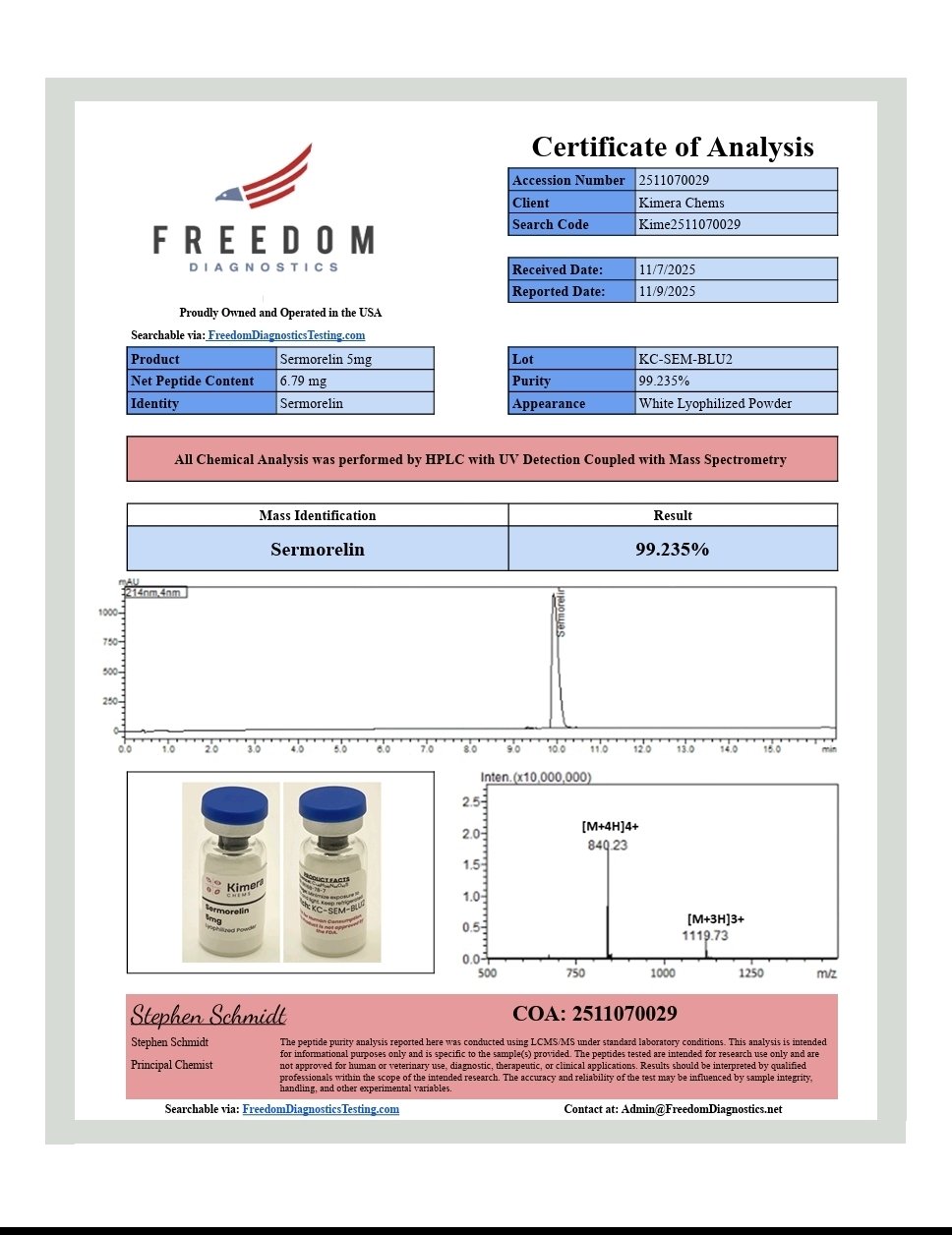
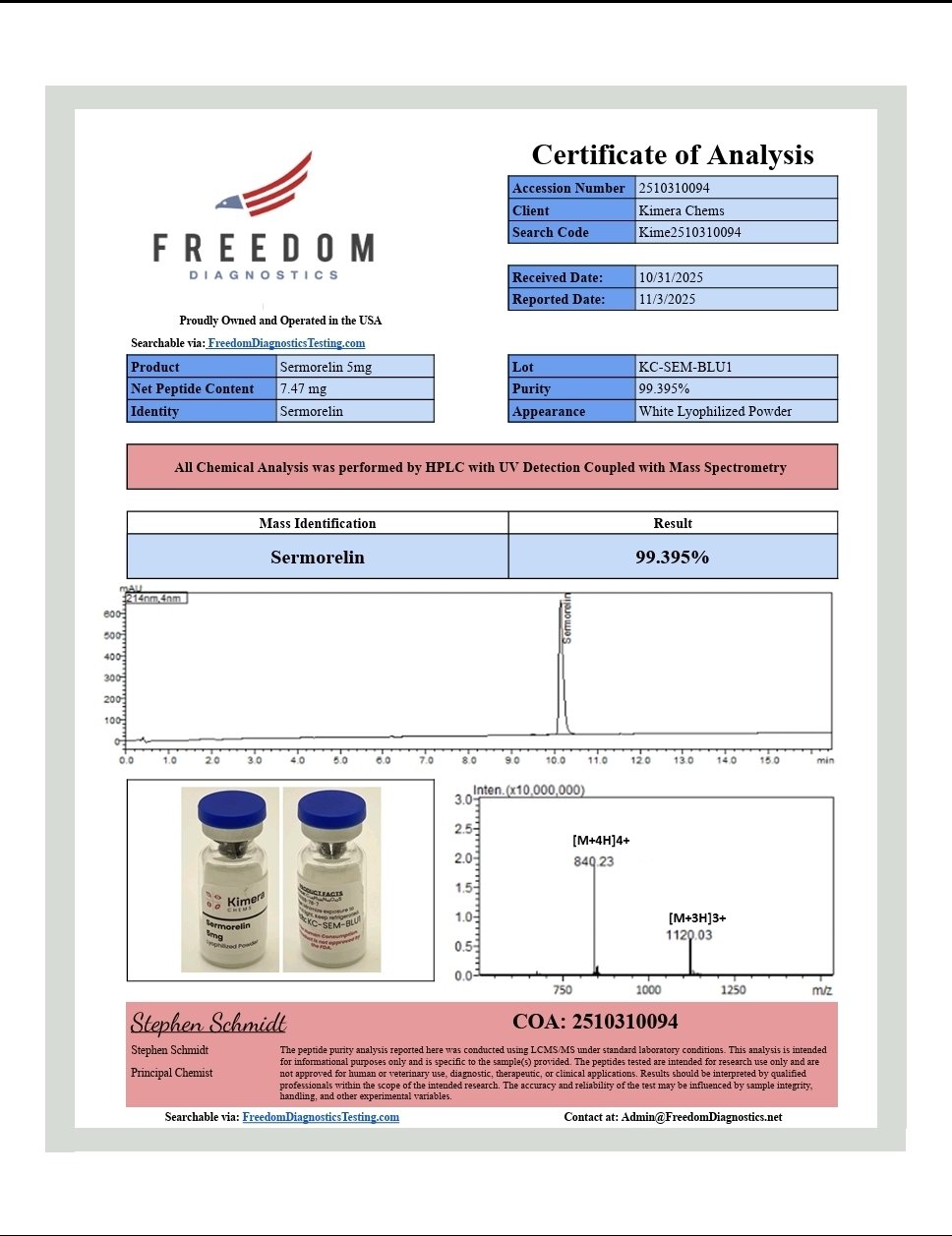
~3,357.9 g/mol
CAS Number (commonly supplied salt):
86168-78-7 (sermorelin acetate)
Structural Description:
Sermorelin is a linear peptide derived from the biologically active N-terminal region of endogenous GHRH. The truncated 1–29 sequence retains full receptor activity while improving stability compared to the full-length hormone. Structural identification and sequence data are indexed in peptide and supplier databases.
Note: Molecular weight and formula may vary slightly depending on salt form (e.g., acetate). Values above refer to the peptide backbone.
Physical and Chemical Properties
-
Appearance: White to off-white lyophilized powder
-
Solubility: Soluble in water and buffered aqueous solutions after reconstitution
-
Stability: Stable when stored lyophilized under cold, dry, and light-protected conditions
Research Focus Areas
Sermorelin is commonly examined in laboratory research related to:
-
Growth hormone secretion and pituitary signaling
-
Hypothalamic–pituitary–somatotropic axis regulation
-
Endocrine feedback and pulsatile hormone release
-
Comparative studies versus GHRPs and other GH secretagogues
Research Use Disclaimer
Sermorelin is intended for research use only.
Not for human consumption, therapeutic use, or diagnostic application. All handling and use must comply with applicable laws, regulations, and laboratory safety standards.
Summary
Sermorelin is a well-established GHRH analog peptide used in laboratory research to study growth hormone physiology and pituitary function. Commonly supplied as the acetate salt, it is identified by:
-
CAS: 86168-78-7 (acetate form)
-
Peptide Length: 29 amino acids
-
Molecular Weight (peptide): ~3,357.9 g/mol
Its physiologic mechanism of stimulating endogenous GH release makes sermorelin a foundational research tool for studies of growth hormone regulation and endocrine signaling.
| CAS Number | 86168-78-7 |
| Other Names | Sermorelina, Somatoliberin, UNII-89243S03TE, SCHEMBL34139, DTXSID70903978 |
| IUPAC Name | (3S)-4-[[(2S)-1-[[(2S,3S)-1-[[(2S)-1-[[(2S,3R)-1-[[(2S)-4-amino-1-[[(2S)-1-[[(2S)-1-[[(2S)-1-[[(2S)-6-amino-1-[[(2S)-1-[[(2S)-1-[[2-[[(2S)-5-amino-1-[[(2S)-1-[[(2S)-1-[[(2S)-1-[[(2S)-1-[[(2S)-6-amino-1-[[(2S)-1-[[(2S)-1-[[(2S)-5-amino-1-[[(2S)-1-[[(2S,3S)-1-[[(2S)-1-[[(2S)-1-[[(2S)-1-amino-5-carbamimidamido-1-oxopentan-2-yl]amino]-3-hydroxy-1-oxopropan-2-yl]amino]-4-methylsulfanyl-1-oxobutan-2-yl]amino]-3-methyl-1-oxopentan-2-yl]amino]-3-carboxy-1-oxopropan-2-yl]amino]-1,5-dioxopentan-2-yl]amino]-4-methyl-1-oxopentan-2-yl]amino]-4-methyl-1-oxopentan-2-yl]amino]-1-oxohexan-2-yl]amino]-5-carbamimidamido-1-oxopentan-2-yl]amino]-1-oxopropan-2-yl]amino]-3-hydroxy-1-oxopropan-2-yl]amino]-4-methyl-1-oxopentan-2-yl]amino]-1,5-dioxopentan-2-yl]amino]-2-oxoethyl]amino]-4-methyl-1-oxopentan-2-yl]amino]-3-methyl-1-oxobutan-2-yl]amino]-1-oxohexan-2-yl]amino]-5-carbamimidamido-1-oxopentan-2-yl]amino]-3-(4-hydroxyphenyl)-1-oxopropan-2-yl]amino]-3-hydroxy-1-oxopropan-2-yl]amino]-1,4-dioxobutan-2-yl]amino]-3-hydroxy-1-oxobutan-2-yl]amino]-1-oxo-3-phenylpropan-2-yl]amino]-3-methyl-1-oxopentan-2-yl]amino]-1-oxopropan-2-yl]amino]-3-[[(2S)-2-[[(2S)-2-amino-3-(4-hydroxyphenyl)propanoyl]amino]propanoyl]amino]-4-oxobutanoic acid |
| Molecular Formula | C₁₄₉H₂₄₆N₄₄O₄₂S |
| Molecular Weight | 3357.9 |