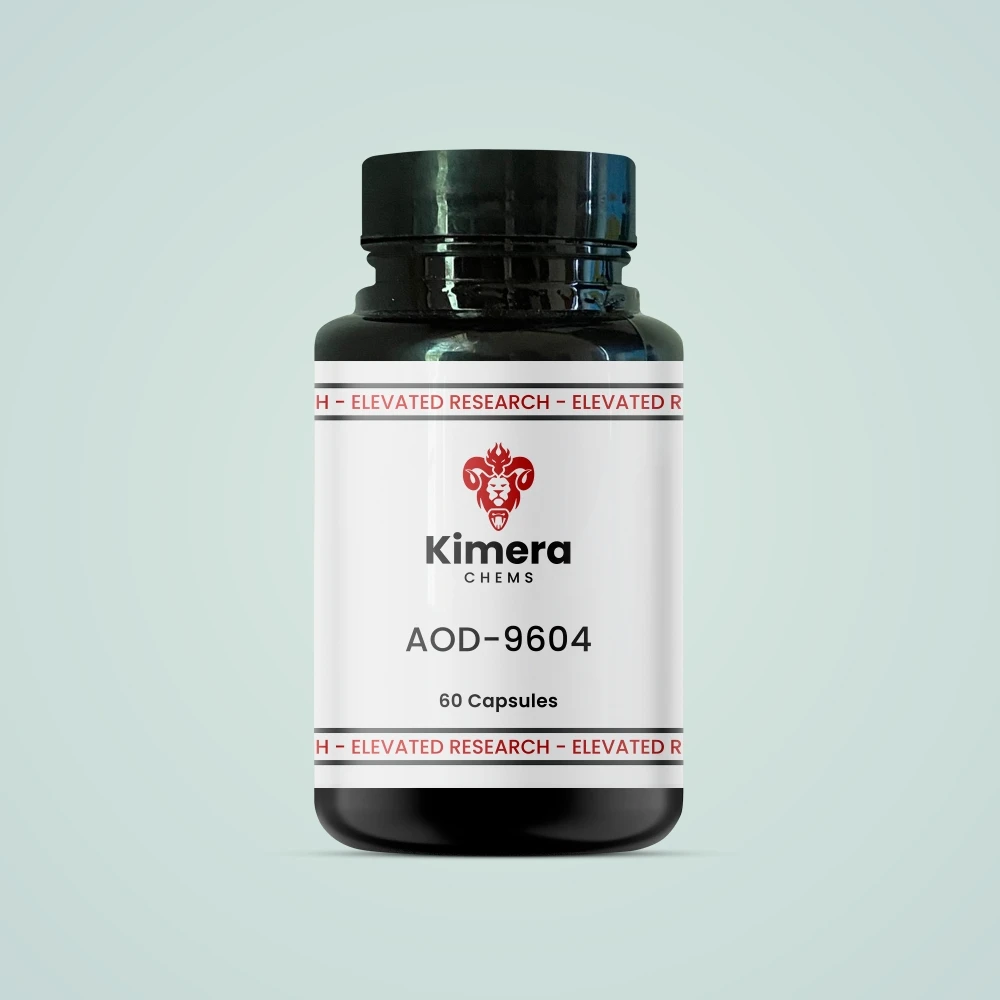
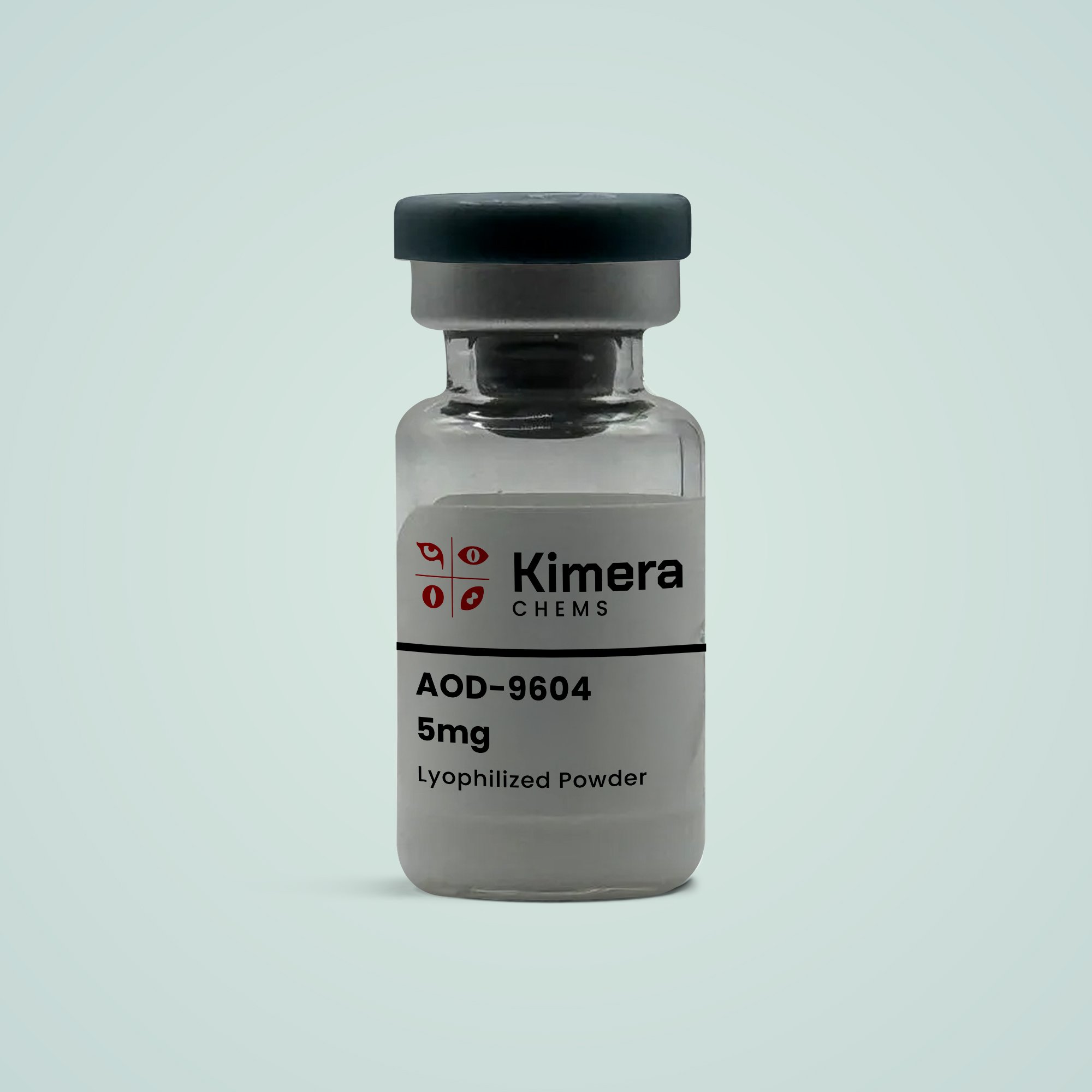
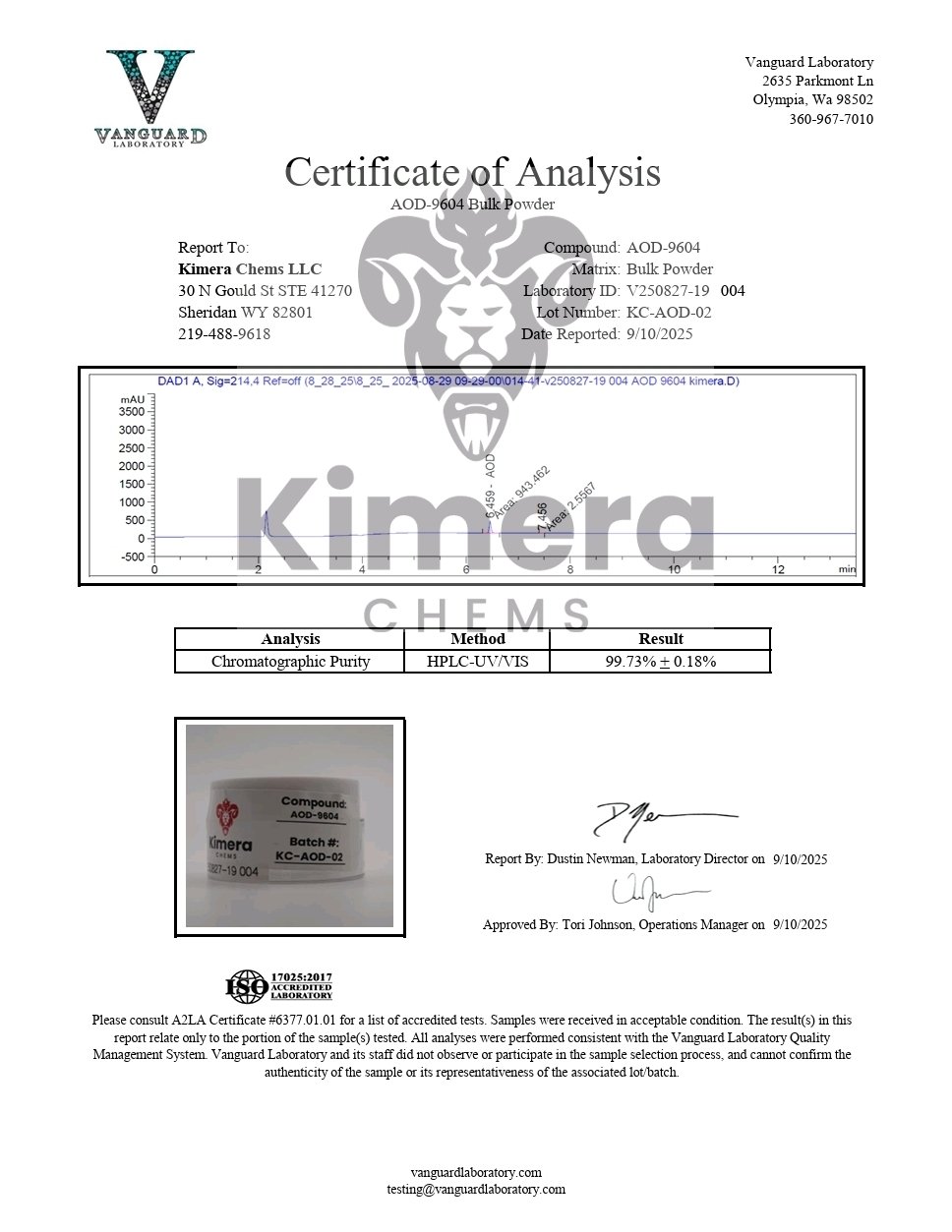

AOD-9604 is a synthetic peptide fragment derived from the human growth hormone molecule. Scientists identify it specifically as a modified hexadecapeptide representing the C-terminal region (176–191). Researchers study this molecule to examine its involvement in metabolic signaling pathways in isolated systems. Scientists evaluate its functional relationship with beta-3 adrenergic receptor–related pathways in laboratory models. The compound is analyzed for its lack of activation of the canonical growth hormone receptor–mediated signaling. This characteristic allows investigators to study non-growth-related cellular mechanisms. Scientists use this AOD 9604 peptide to explore the molecular foundations of lipid metabolism research. Researchers seek to understand its role within the broader scope of somatotropic peptide research models.
Chemical Composition & Purity
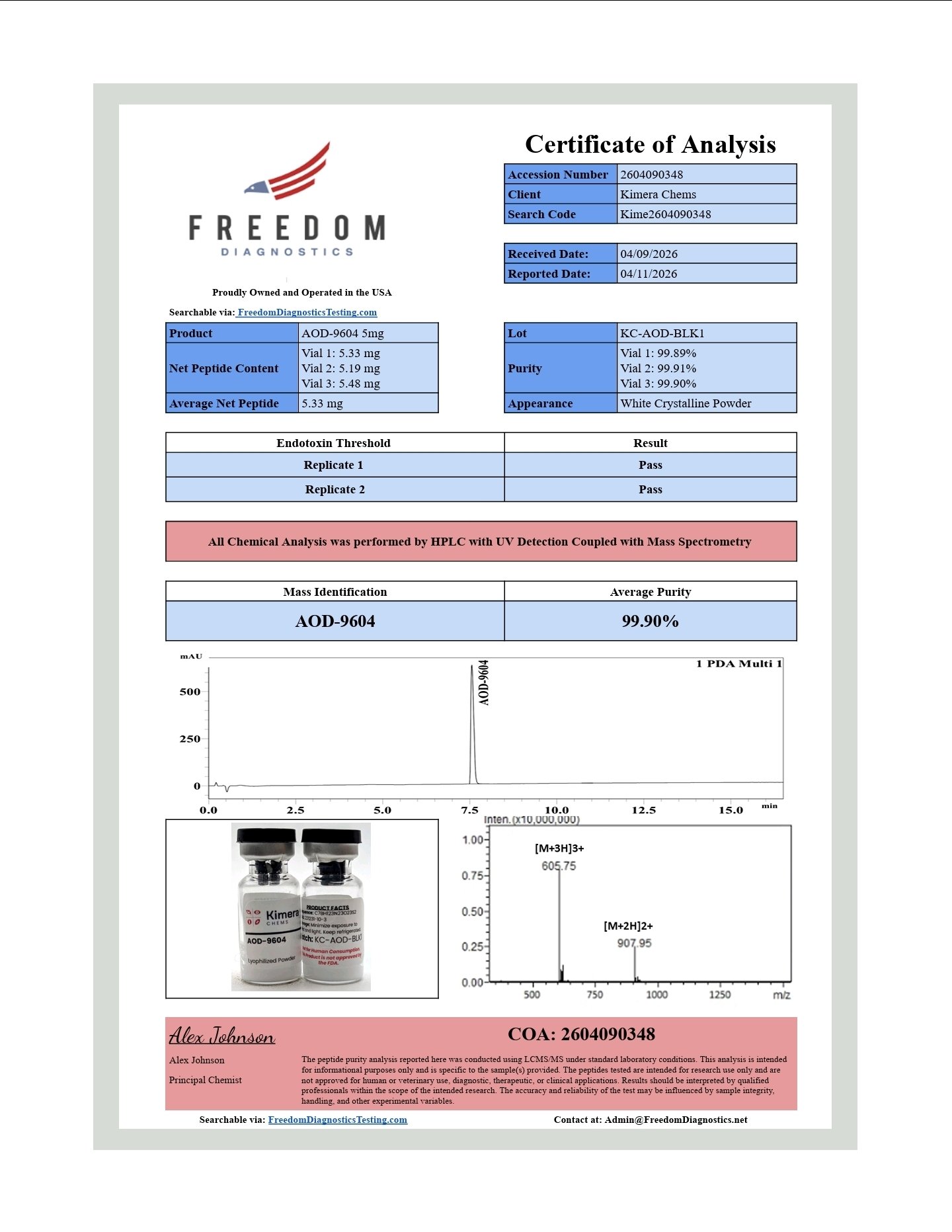
The molecular formula of this compound is C₇₈H₁₂₃N₂₃O₂₃S₂. The peptide sequence begins with L-tyrosyl and ends with L-phenylalanine. The physical form is a white to off-white lyophilized powder. Kimera Chems verifies the material at a purity level of ≥99% using HPLC done by a third party. This ensures the compound remains free from unwanted byproducts.
Research Applications
In laboratory settings, AOD-9604 is used as a research ligand for metabolic studies. Its mechanism is based on its sequence homology to a region of human growth hormone. Scientists study AOD-9604 for its interaction with receptors on fat cells (adipocytes). Researchers evaluate it in in vitro models to examine binding to growth hormone and beta-adrenergic receptors. This work focuses on understanding ligand-receptor associations in metabolic tissues.
- Adipocyte Receptor Studies: For analyzing ligand binding profiles.
- Metabolic Signaling Research: Use in models of lipolysis pathways.
- Receptor Binding Assays: Measuring affinity for specific receptors.
- Comparative Fragment Analysis: Studying hGH derivative effects.
- Cell Culture Experiments: Application in differentiated adipocyte models.
Storage & Handling Protocol
Scientists, when buy aod 9604, follow strict laboratory standards to protect peptide stability. Proper storage prevents chemical degradation and ensures reliable analytical results.
- Lyophilized peptides can be kept at room temperature, away from direct light.
- If reconstituted, the sample should be kept in the fridge.
- For long-term storage, the material must be stored in the freezer.
- Keep material in sealed, moisture-free conditions.
- Store in an amber vial or opaque container.
Compliance & Usage Disclaimer
This compound is for Research Use Only (RUO). It is not suggested for human or animal use and is not classified as a drug, food, or dietary supplement.
Availability & Research Sourcing
Kimera Chems provides high-purity chemicals to support researchers. Scientists looking for aod 9604 for sale, or other compounds like SARMs, nootropics and amino acids, can browse our website. We consistently strive to deliver high-quality products that yield accurate results.
| CAS Number | 221231-10-3 |
| Other Names | Tyr-hgh frag 176-191, Anti obesity drug, hexadecapeptide AOD9604 |
| IUPAC Name | L-tyrosyl-L-leucyl-L-arginyl-L-isoleucyl-L-valyl-L-glutaminyl-L-cysteinyl-L-arginyl-L-seryl-L-valyl-L-alpha-glutamyl-glycyl-L-seryl-L-cysteinyl-glycyl-L-phenylalanine (7->14)-disulfide. |
| Molecular Formula | C78H123N23O23S2 |
| Molecular Weight | 1815.1 |