
Adrenochrome — Research Chemical
What Is Adrenochrome?
Adrenochrome (CAS 54-06-8) is an aminochrome compound with the molecular formula C₉H₉NO₃ and a molecular weight of 179.17 g/mol. It is formed through the oxidation of epinephrine (adrenaline) and belongs to the indole family of organic compounds. First characterized in the early twentieth century, adrenochrome has appeared in peer-reviewed literature spanning neurochemistry, hematology, and oxidative stress research.
Adrenochrome is chemically unstable and degrades readily under ambient conditions, which has historically limited its utility in sustained experimental protocols. Its downstream oxidation product, adrenolutin, and its synthetic derivative, carbazochrome (also known as Adrenoxyl), have also been subjects of independent investigation.
Adrenochrome in Published Research
Neurochemistry and the Adrenochrome Hypothesis
In the 1950s and 1960s, researchers Abram Hoffer and Humphry Osmond proposed that endogenous adrenochrome accumulation might play a role in the pathophysiology of schizophrenia. This framework, known as the adrenochrome hypothesis, suggested that aberrant oxidation of catecholamines could produce psychotomimetic metabolites. While the hypothesis generated significant academic discussion during that period, subsequent research did not produce sufficient evidence to sustain it as a mainstream model of schizophrenia etiology. The hypothesis remains a point of historical interest in psychiatric research literature.
Hemostasis Research
Adrenochrome and its derivative carbazochrome have been evaluated in the context of capillary hemostasis. Carbazochrome was explored as a capillary-stabilizing agent and saw limited clinical investigation in several countries under the trade name Adrenoxyl. Research in this area focused on the compound’s potential effects on vascular permeability and platelet behavior.
Oxidative Stress and Catecholamine Metabolism
Adrenochrome has been used as a model compound in studies examining catecholamine oxidation pathways and aminochrome cytotoxicity. Researchers have investigated the role of aminochromes, including adrenochrome, in generating reactive oxygen species (ROS) and their interactions with cellular antioxidant defense systems such as glutathione. This line of inquiry intersects with broader research into oxidative damage mechanisms.
Chemical and Physical Properties
Adrenochrome presents as a dark violet to brown crystalline solid. Key identifiers and properties include the following: CAS number 54-06-8, molecular formula C₉H₉NO₃, molecular weight 179.17 g/mol, IUPAC name 3-hydroxy-1-methyl-2,3-dihydro-1H-indole-5,6-dione, and PubChem CID 5898. The compound is soluble in water and polar solvents, though its instability in solution necessitates careful handling and storage protocols in laboratory settings.
Storage and Handling
Adrenochrome is chemically unstable under ambient conditions and requires proper storage to maintain integrity. This product ships with desiccant to protect against moisture exposure during transit. Upon receipt, researchers should store adrenochrome desiccated at -20°C or colder for long-term stability. Refrigerated storage (2–8°C) with desiccant is acceptable for short-term use. Exposure to moisture, light, and elevated temperatures will accelerate degradation to downstream oxidation products including adrenolutin. Researchers should plan experimental protocols accordingly and minimize the duration the compound remains at room temperature.
Why Researchers Choose Kimera Chems
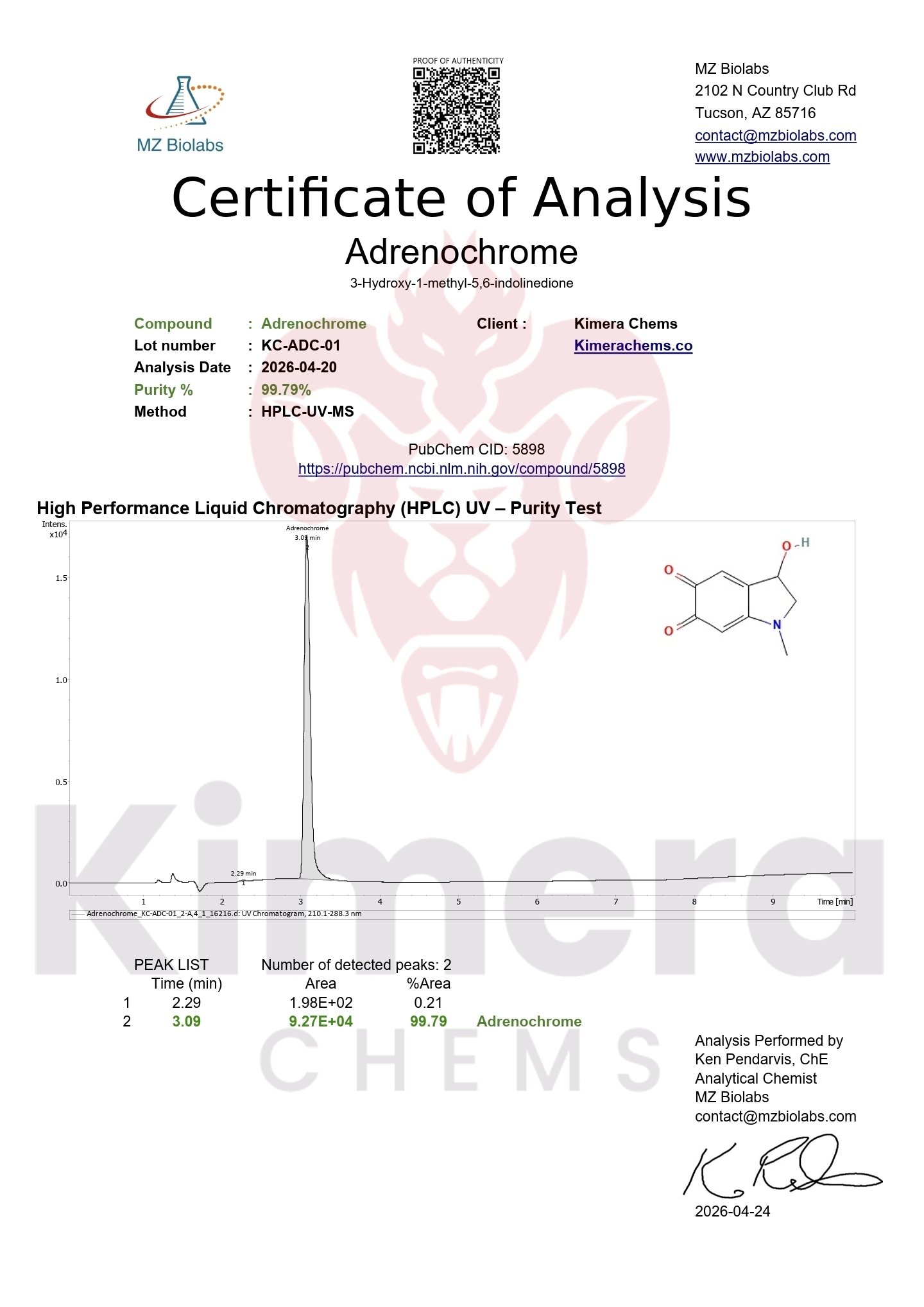
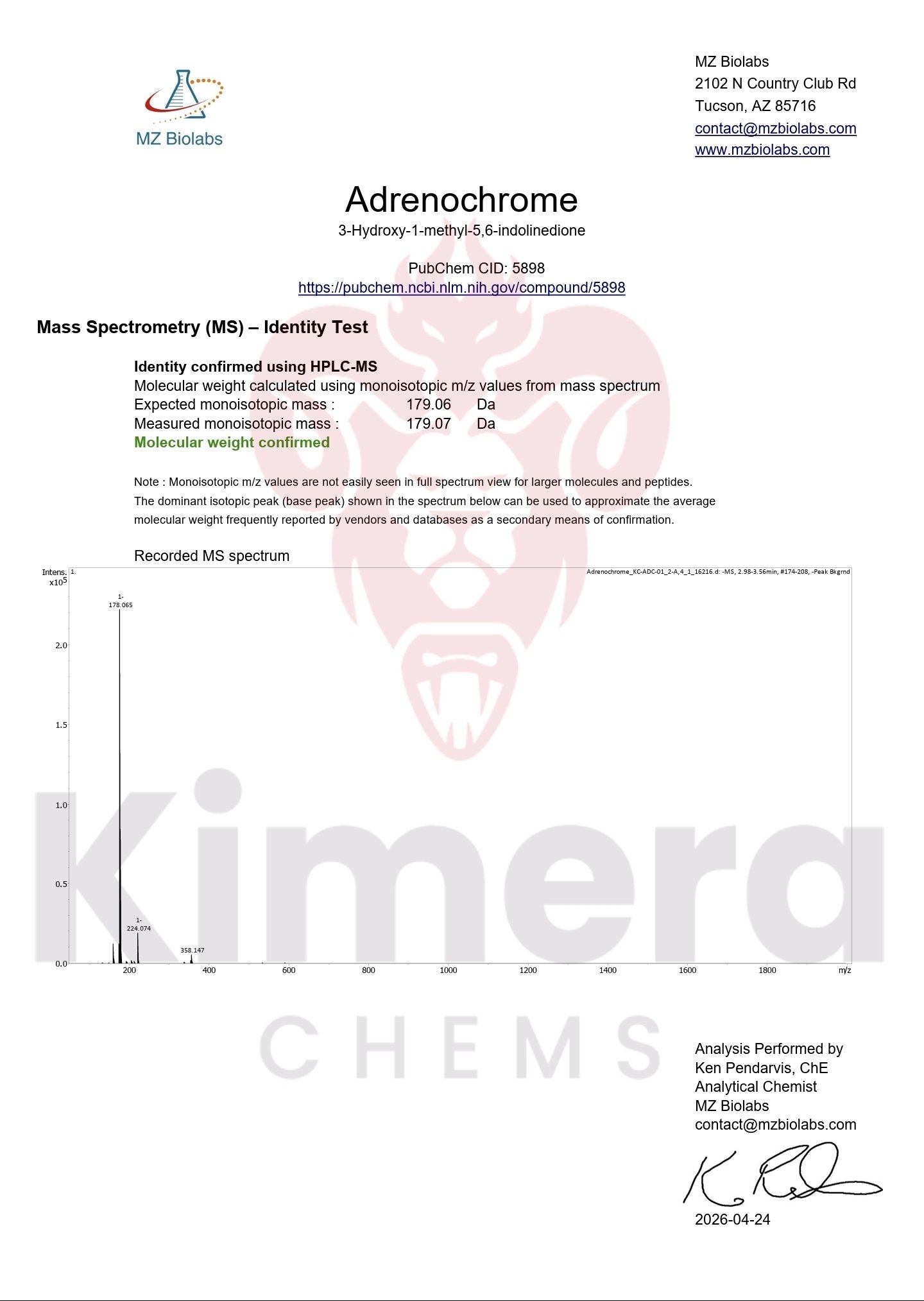
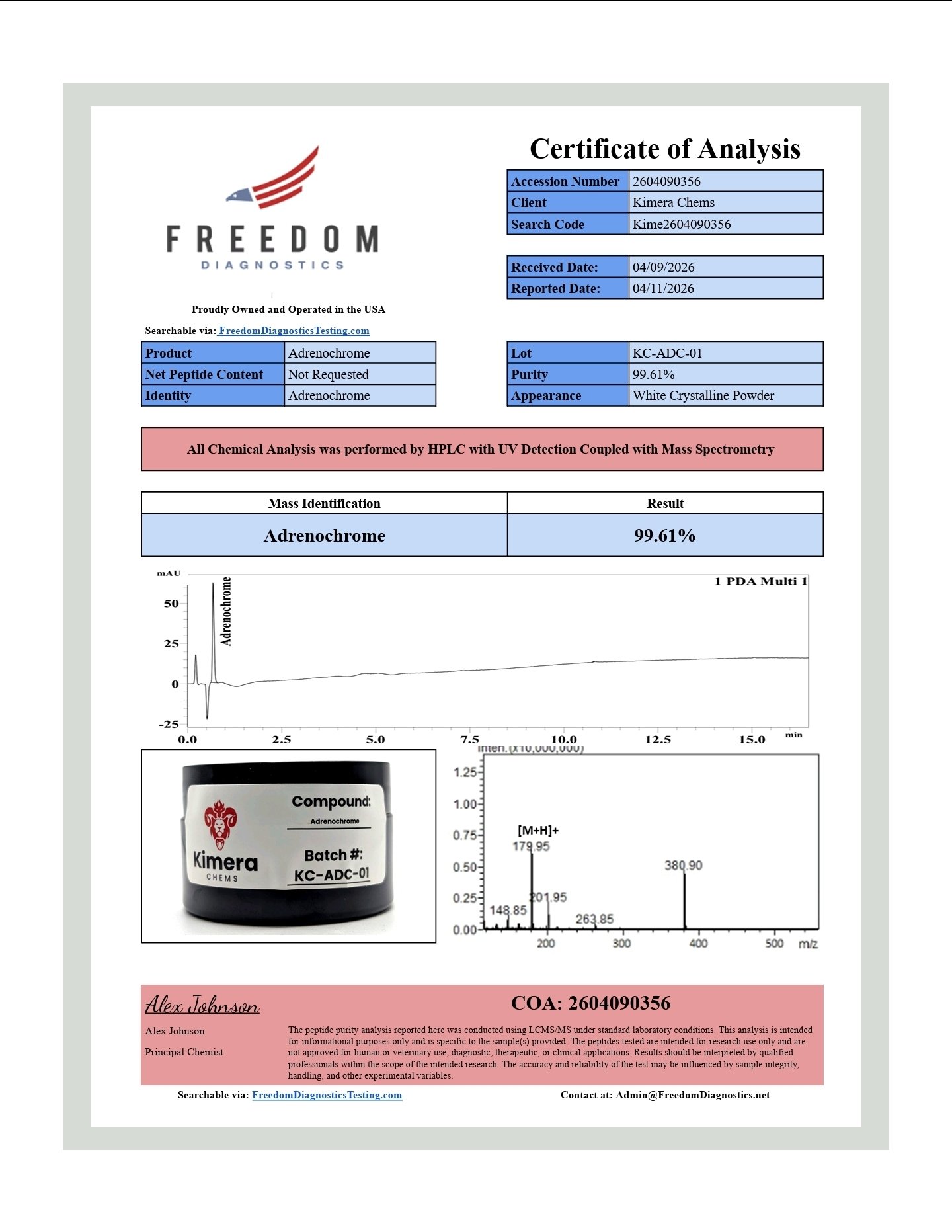
Every batch of adrenochrome available through Kimera Chems is third-party tested for identity and purity. Certificates of analysis (COAs) are available upon request. All products ship from the United States with fast domestic fulfillment.
Disclaimer
This product is sold strictly for in vitro research and educational purposes. It is not intended for human or animal consumption. Adrenochrome is not a dietary supplement, food, or drug. By purchasing this product, the buyer agrees to use it only in lawful research applications and assumes full responsibility for compliance with all applicable local, state, and federal regulations. Kimera Chems makes no therapeutic or diagnostic claims regarding this compound.
| CAS Number | 54-06-8 |
| IUPAC Name | 3-hydroxy-1-methyl-2,3-dihydro-1H-indole-5,6-dione |
| Molecular Formula | C9H9NO3 |
| Molecular Weight | 178.175 |